Cornwall’s Underwater Seasons
We’re all very aware of the changing seasons on land, but not so many people are as familiar with how varied the seasons are underwater too - especially somewhere like Cornwall and elsewhere in the UK.
Over the course of the year, the abundance of marine life varies and the environment can go from tranquil to stormy, but there’s always a rich variety of marine life to see: from cuttlefish and sharks to sea slugs and anemones.
Spring
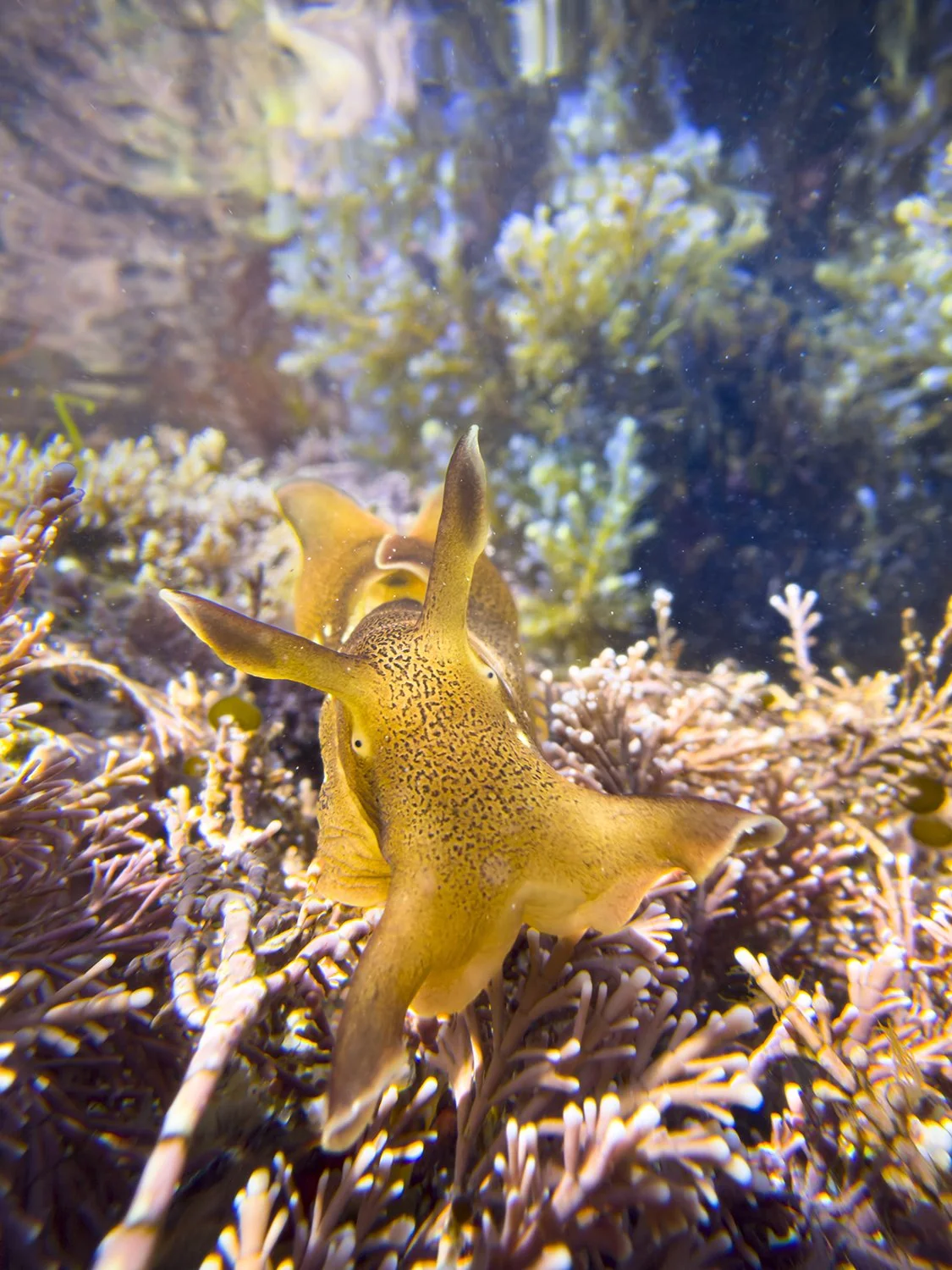
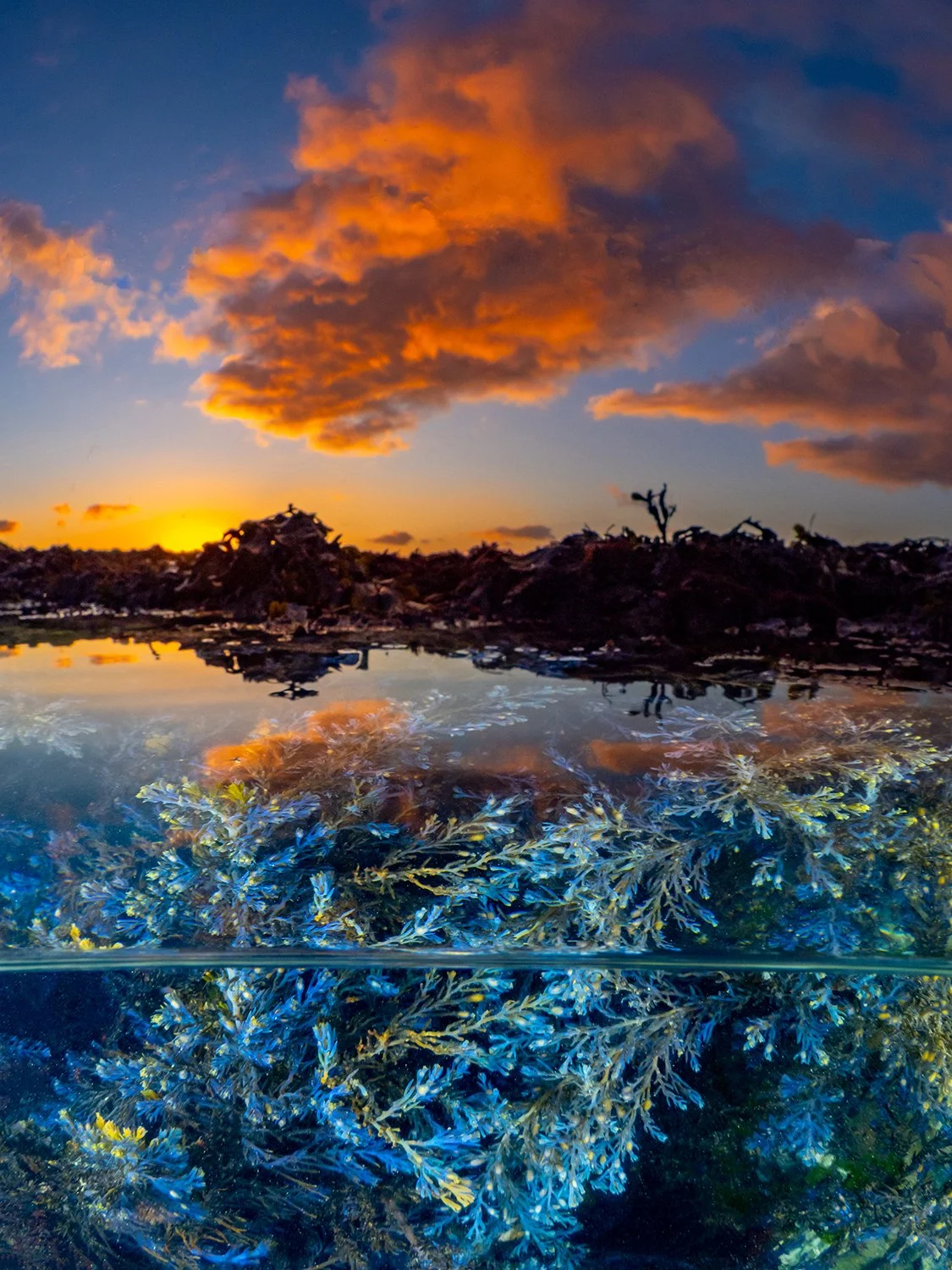
Spring can be unsettled and sea conditions can take time to calm down, but as the season moves on, seaweed that had mostly died back over the winter regrows. Now fresh and vibrant, various species replenish with a rich variety of colours and textures, from greens and reds to browns, and even the stunning iridescent blues of rainbow wrack. Among the seaweed, sea hares gather to mate, and many sea slugs become active.
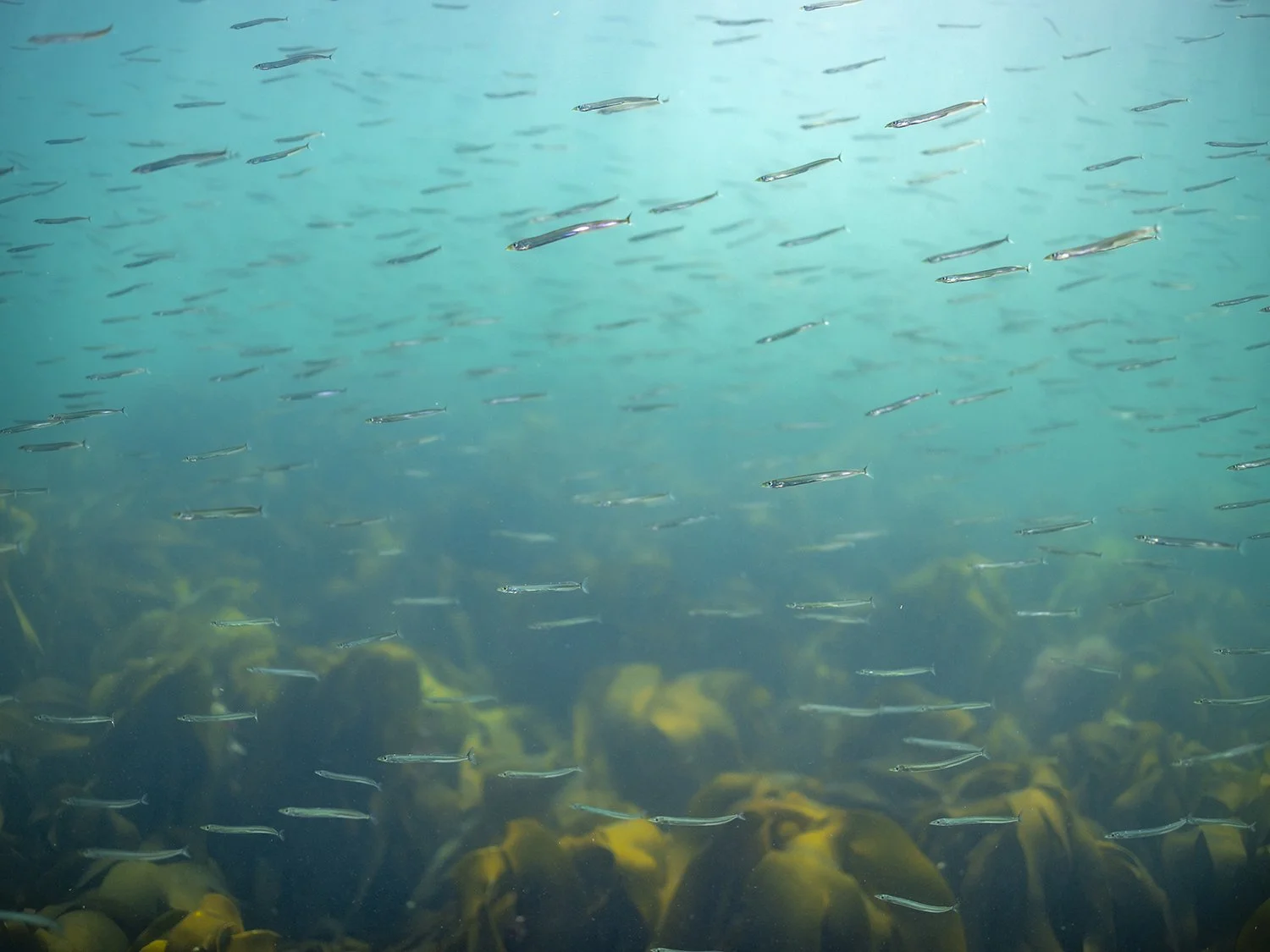
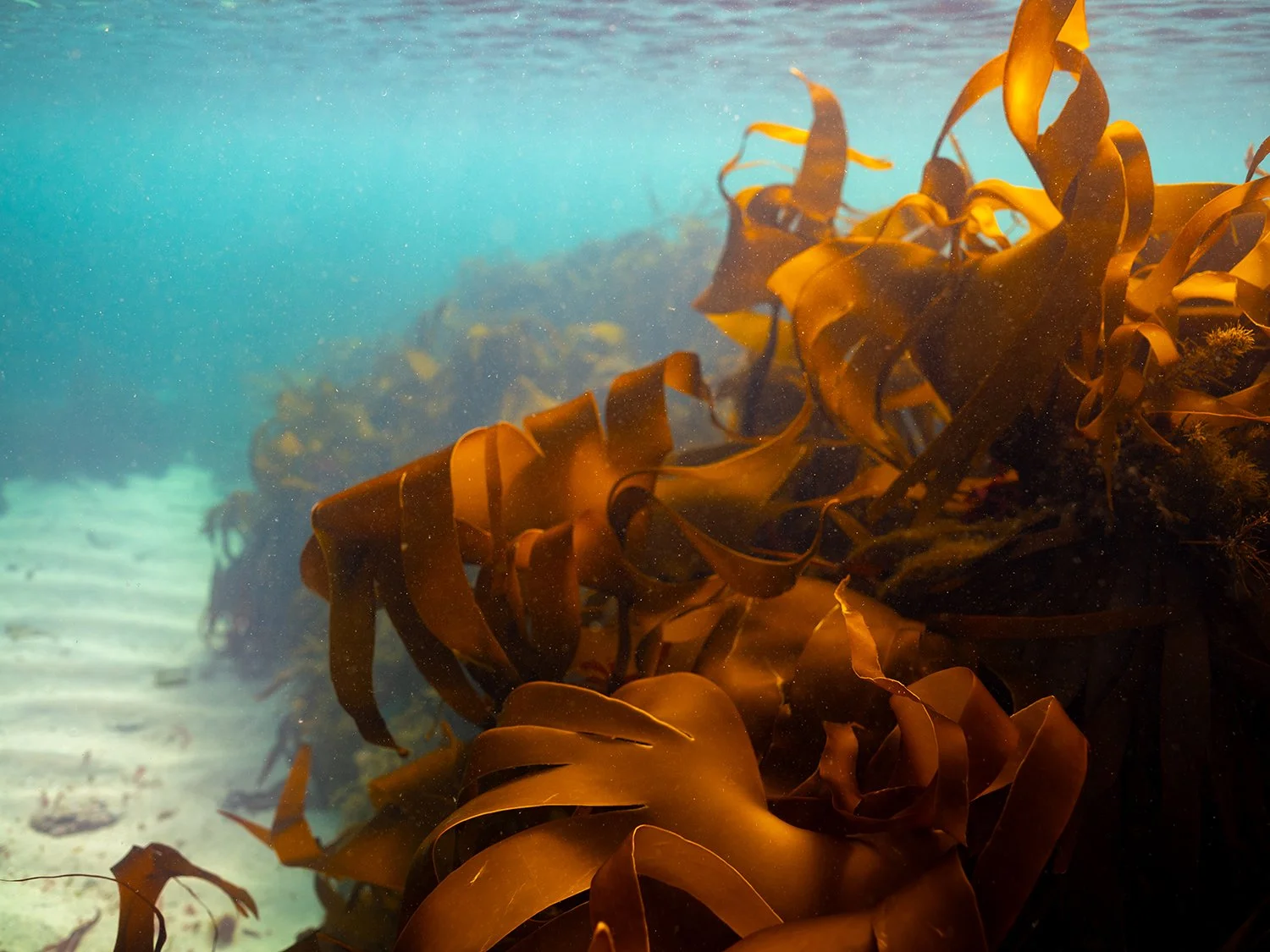
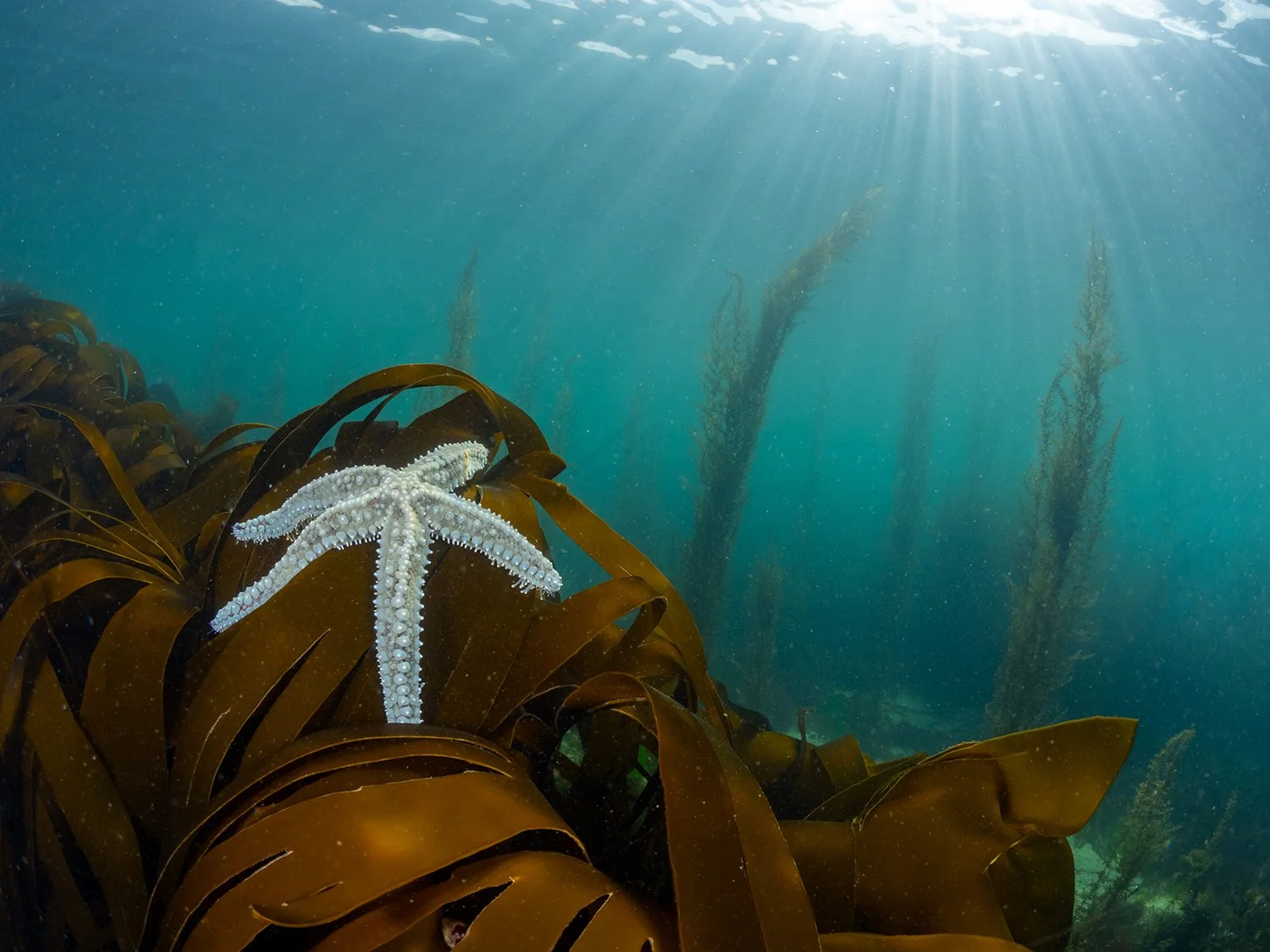
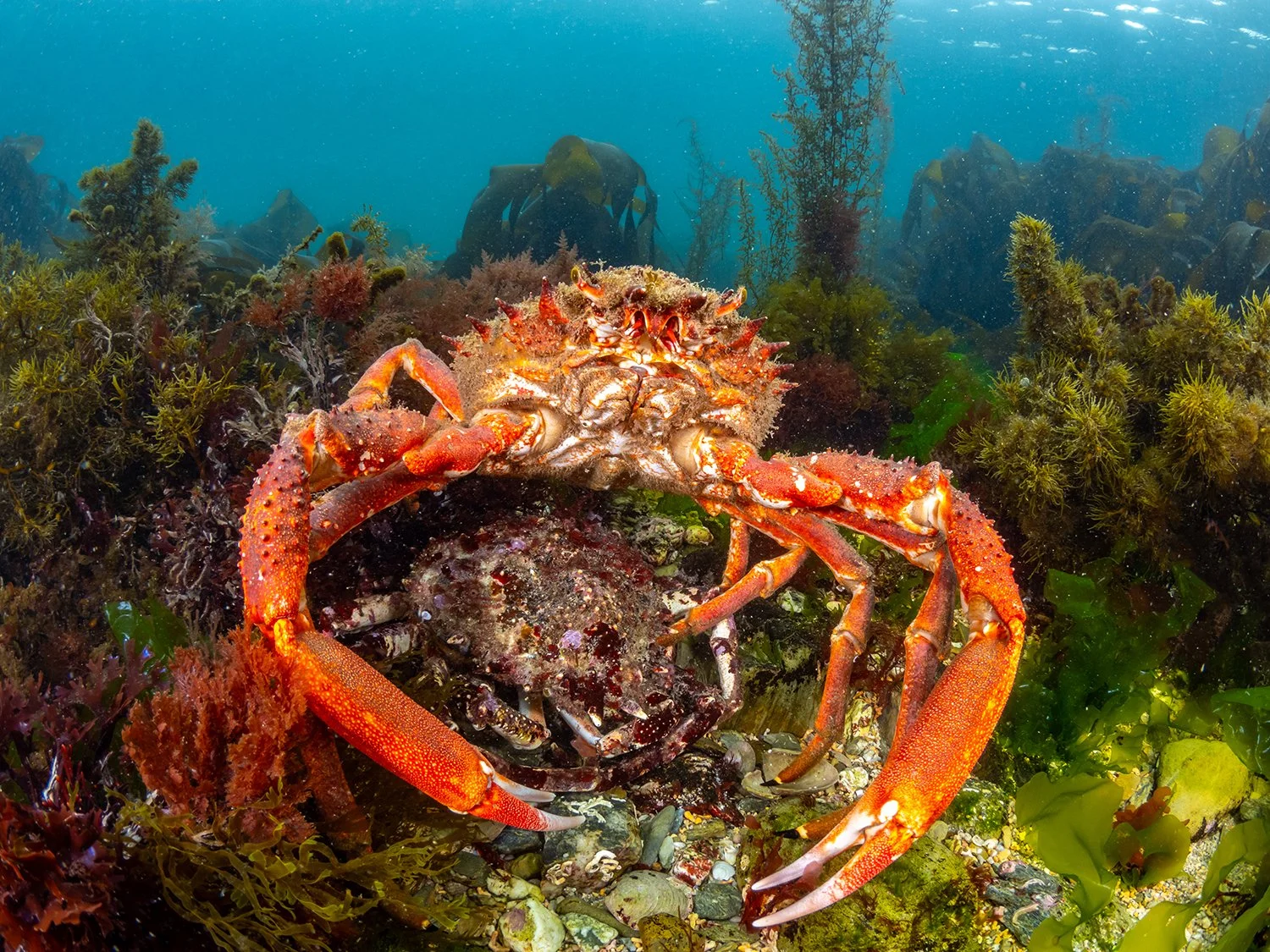
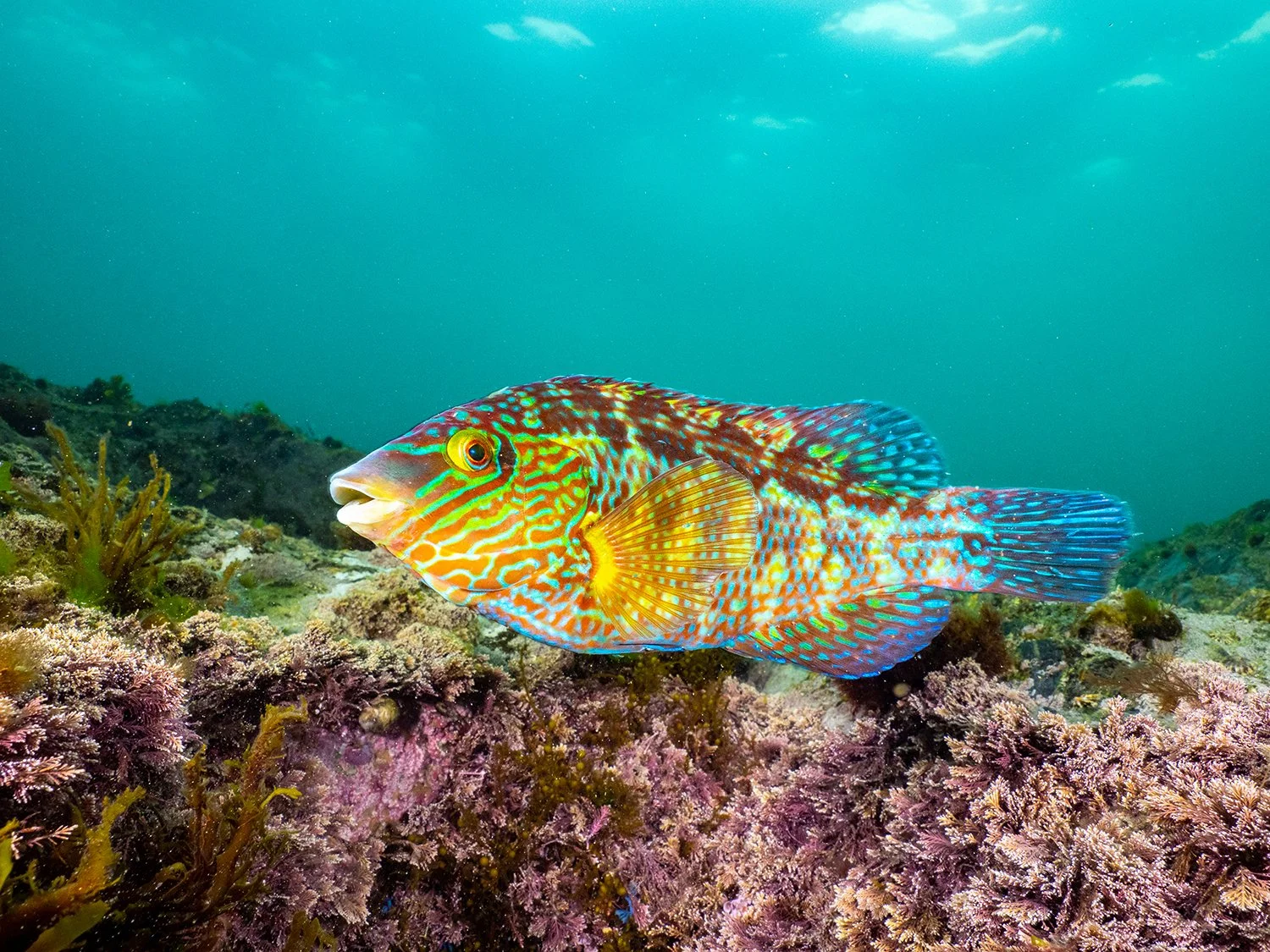
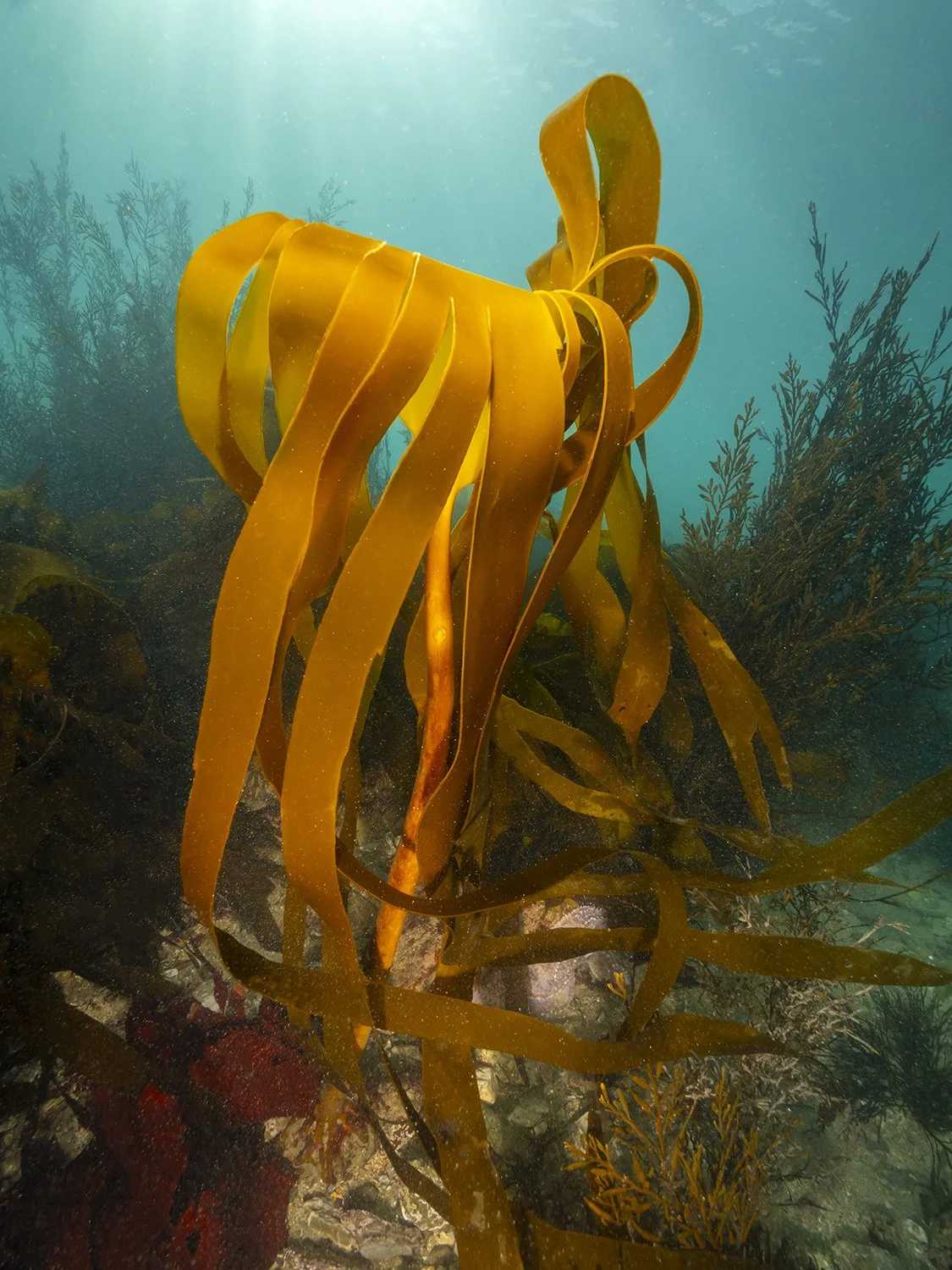
Away from the shallows, the kelp forests recover, now in beautiful amber hues, especially when bathed in spring sun rays. Spring is also heralded by the return of shoals of sand eels, a key food source for many other creatures. Other fish such as the beautiful corkwing wrasse become more active too, with males building nests of seaweed along the rocky shore. Large spider crabs return in numbers from deeper water, often seen in pairs with a large male guarding a female, and spiny starfish are easy to spot on the sand and kelp.
Summer
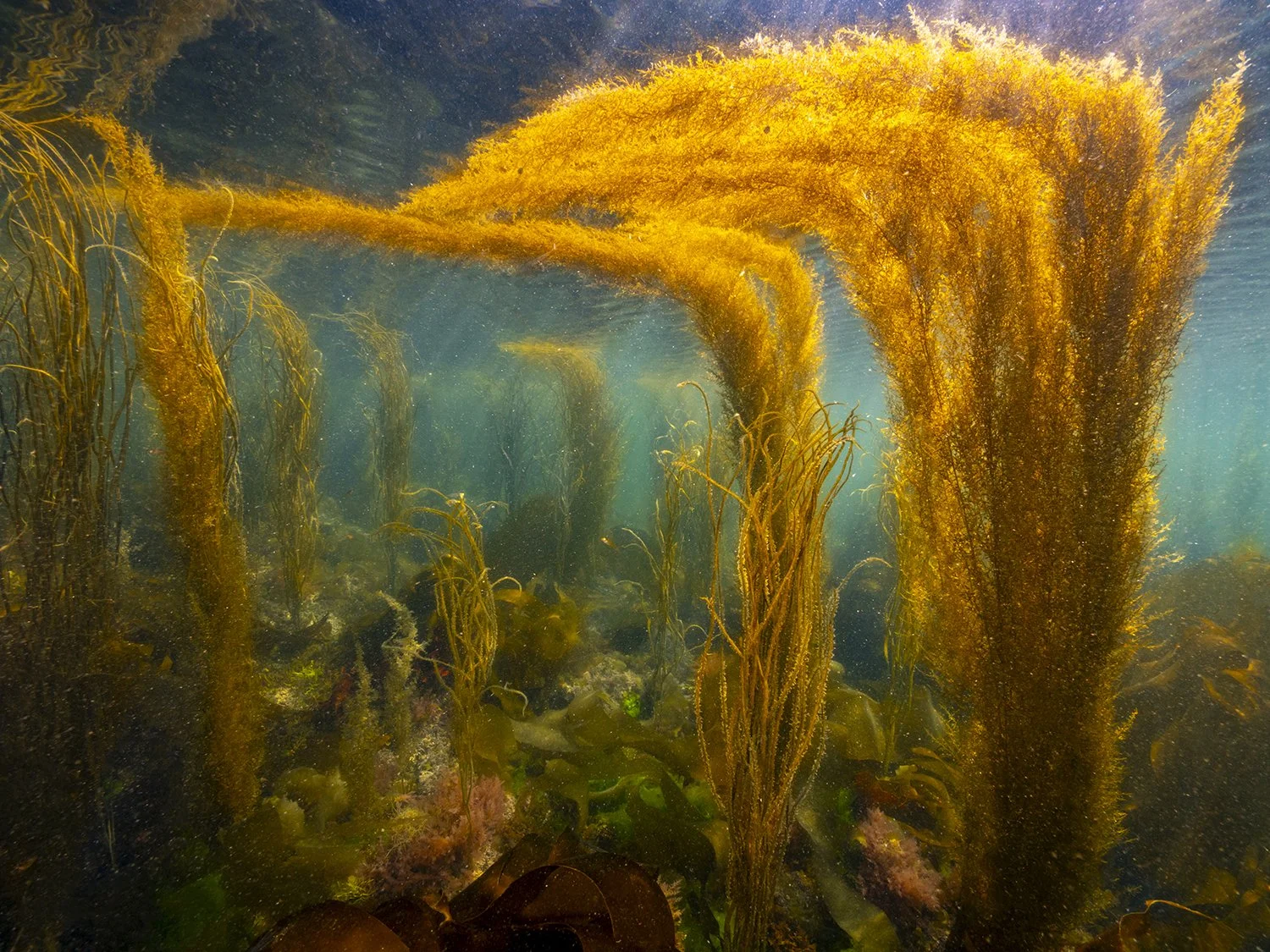
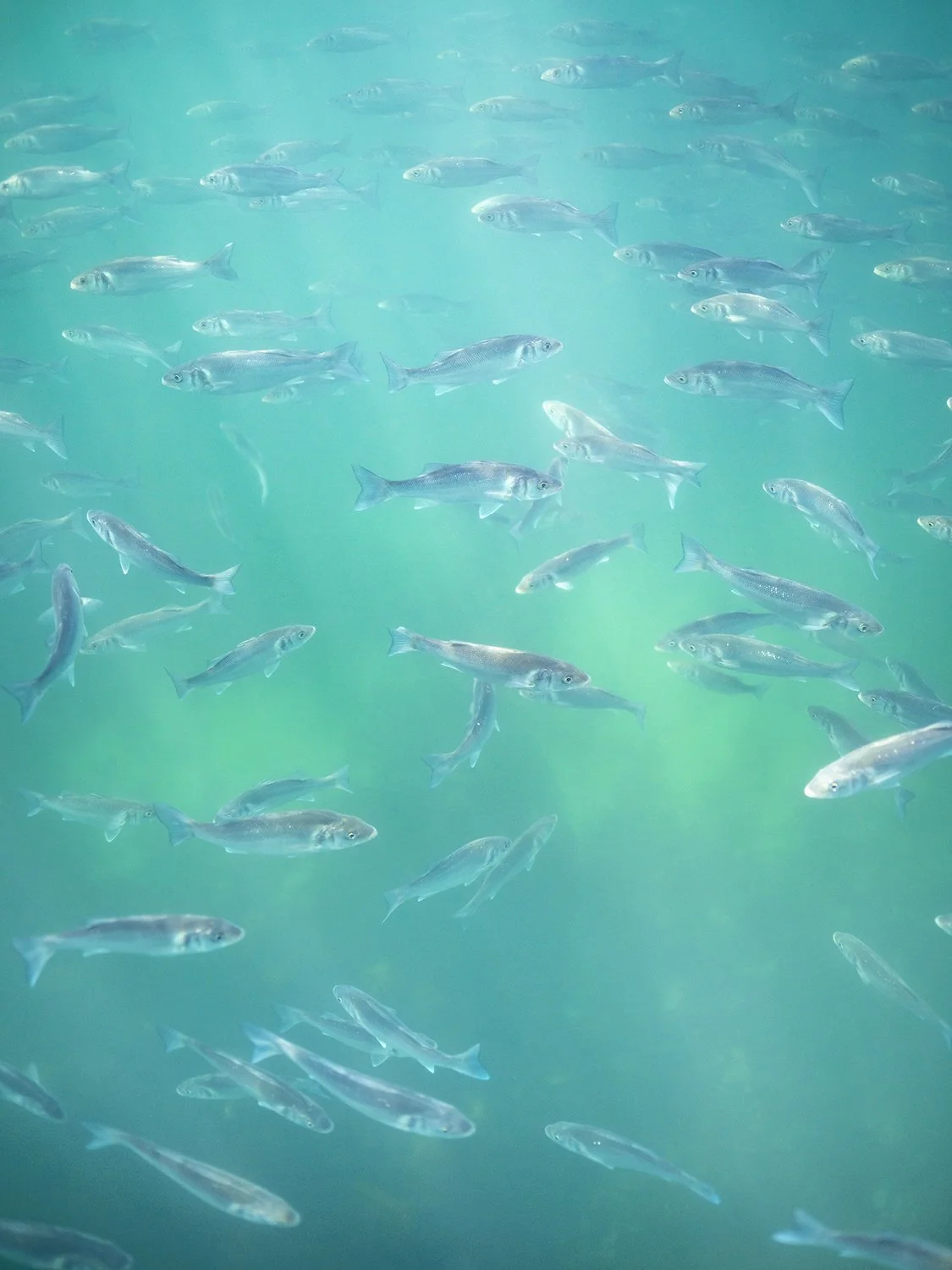
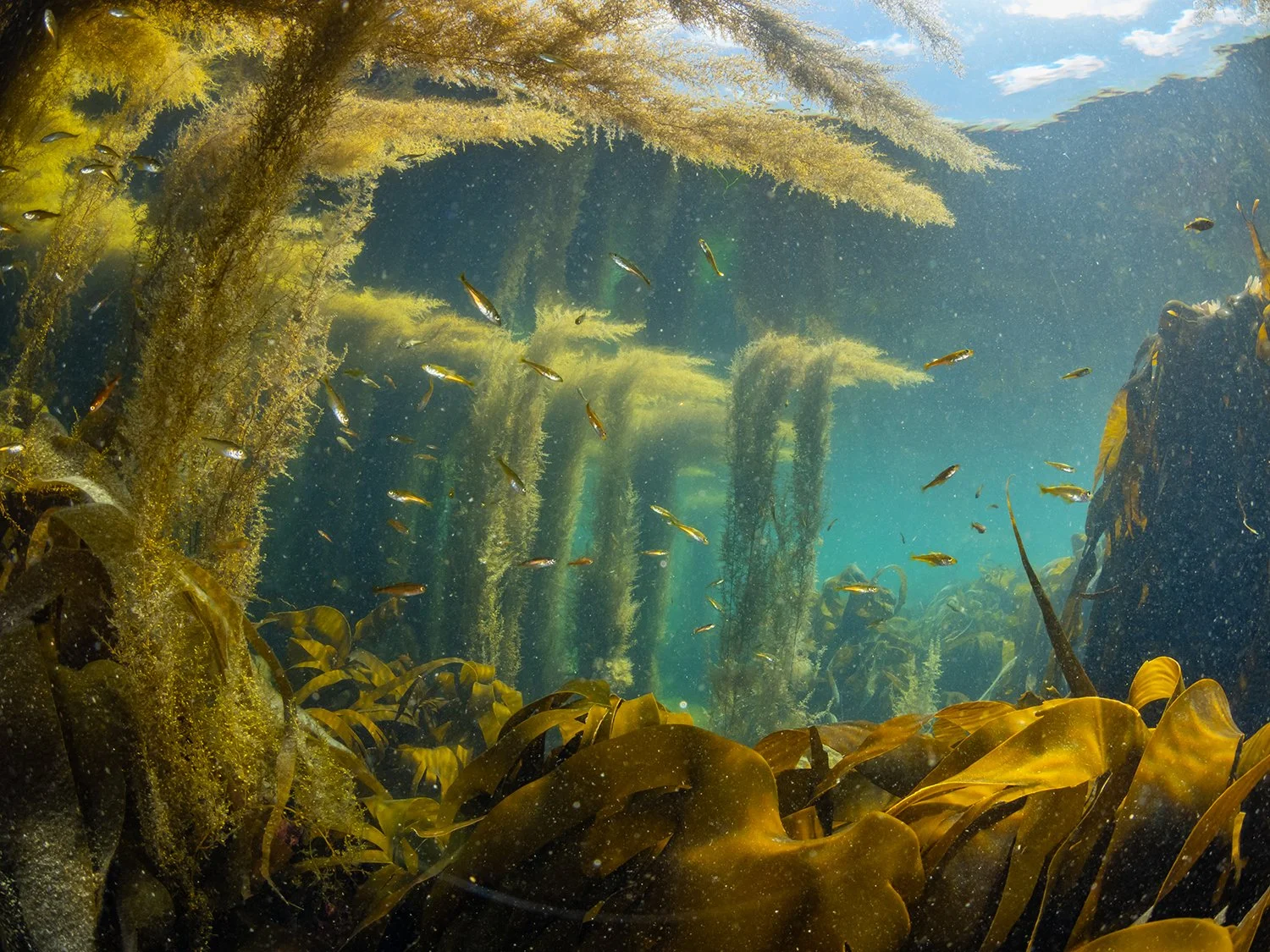
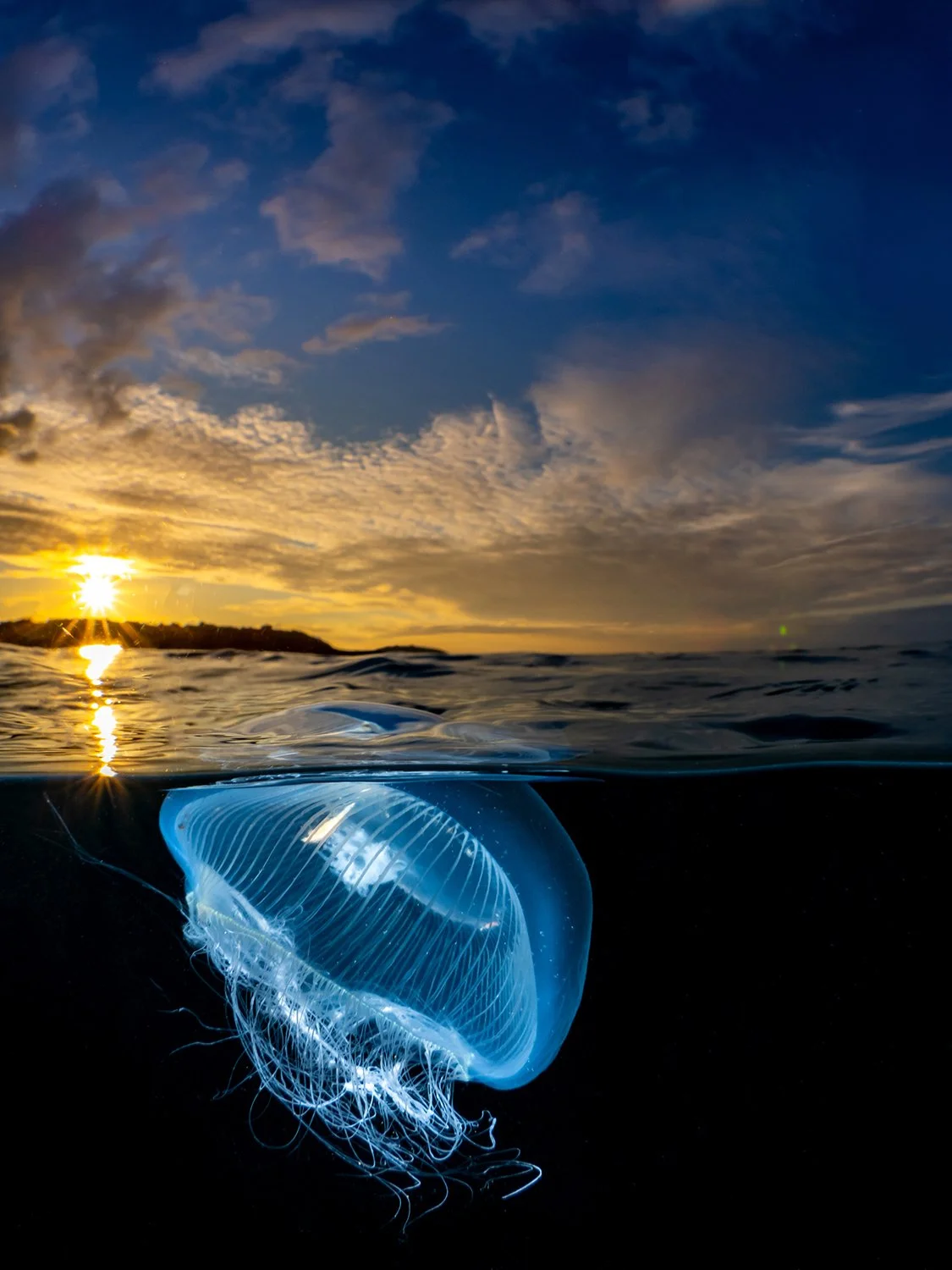
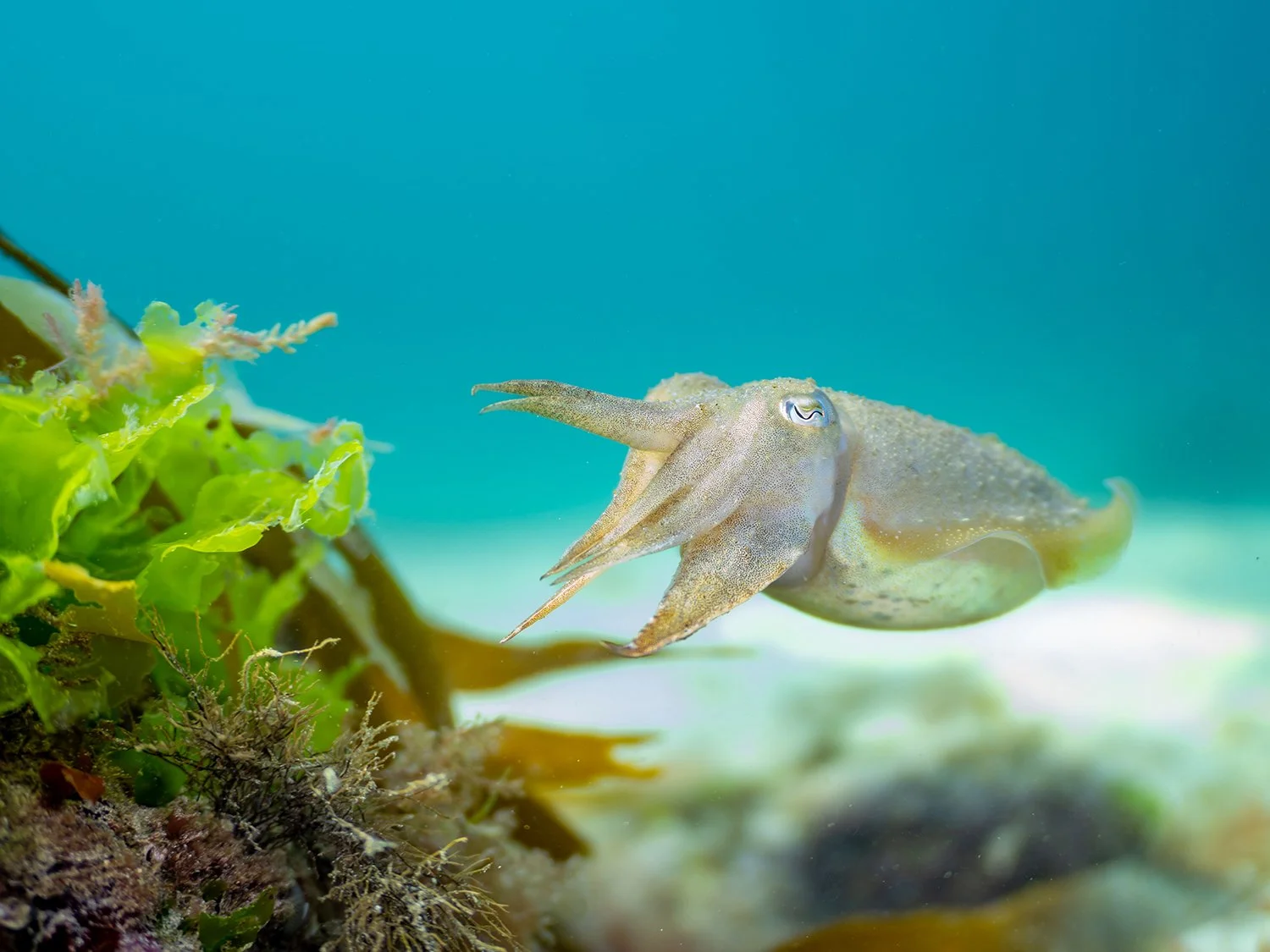
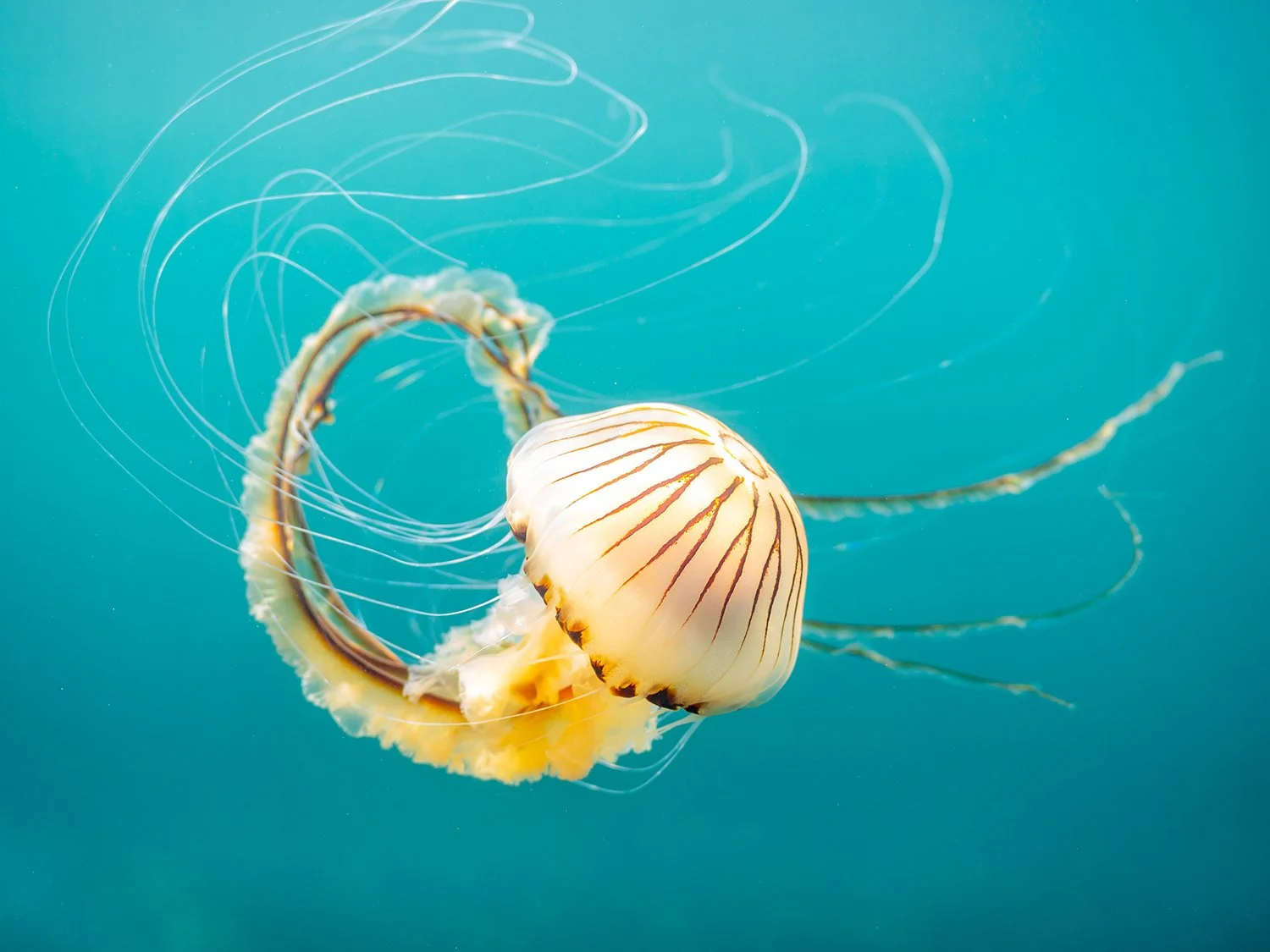
With the warmer waters of summer, the jellyfish return. Often small individuals arrive first, blue and compass jellyfish, followed by much larger animals as the summer progresses. In recent years, crystal jellies have become more common too, with their delicate transparent bodies pulsating around the shore. The seaweed is now at full scale, covering much of the environment, and huge columns of brown wireweed (Sargassum) rise up from the surface - sadly an invasive species that is spreading rapidly in Cornwall. Shoals of juvenile pollack take shelter among the weed, and large groups of sea bass often circle inquisitively around divers. The first cuttlefish also start to appear, mostly small individuals hiding on the sand.
Autumn
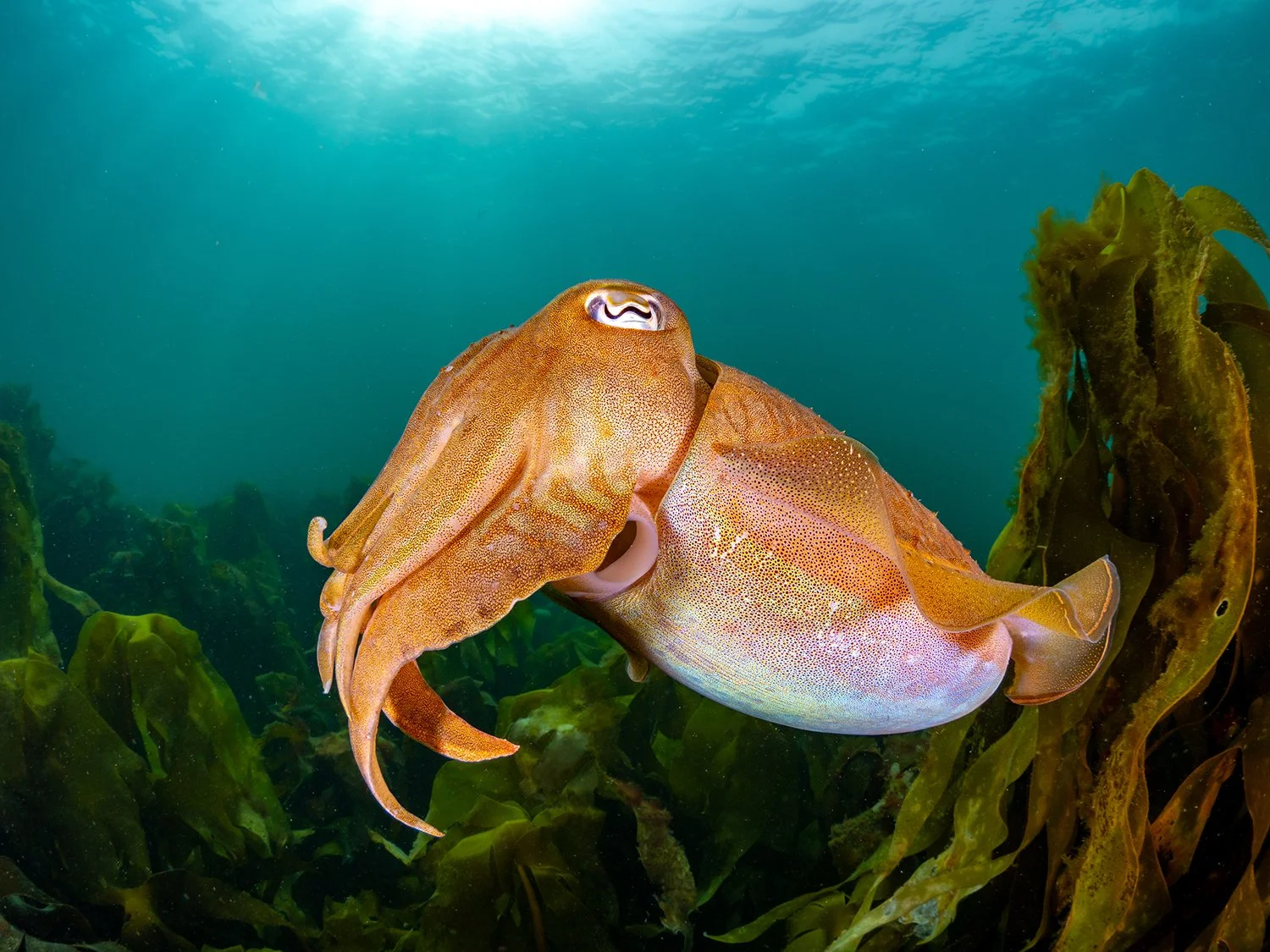
Autumn can initially begin with clear, calm waters, and a great time to see large, very intelligent, two-year-old cuttlefish resting in small groups between patches of kelp. Large thornback rays also become quite active, and the ever-present catsharks can still be seen cruising around.
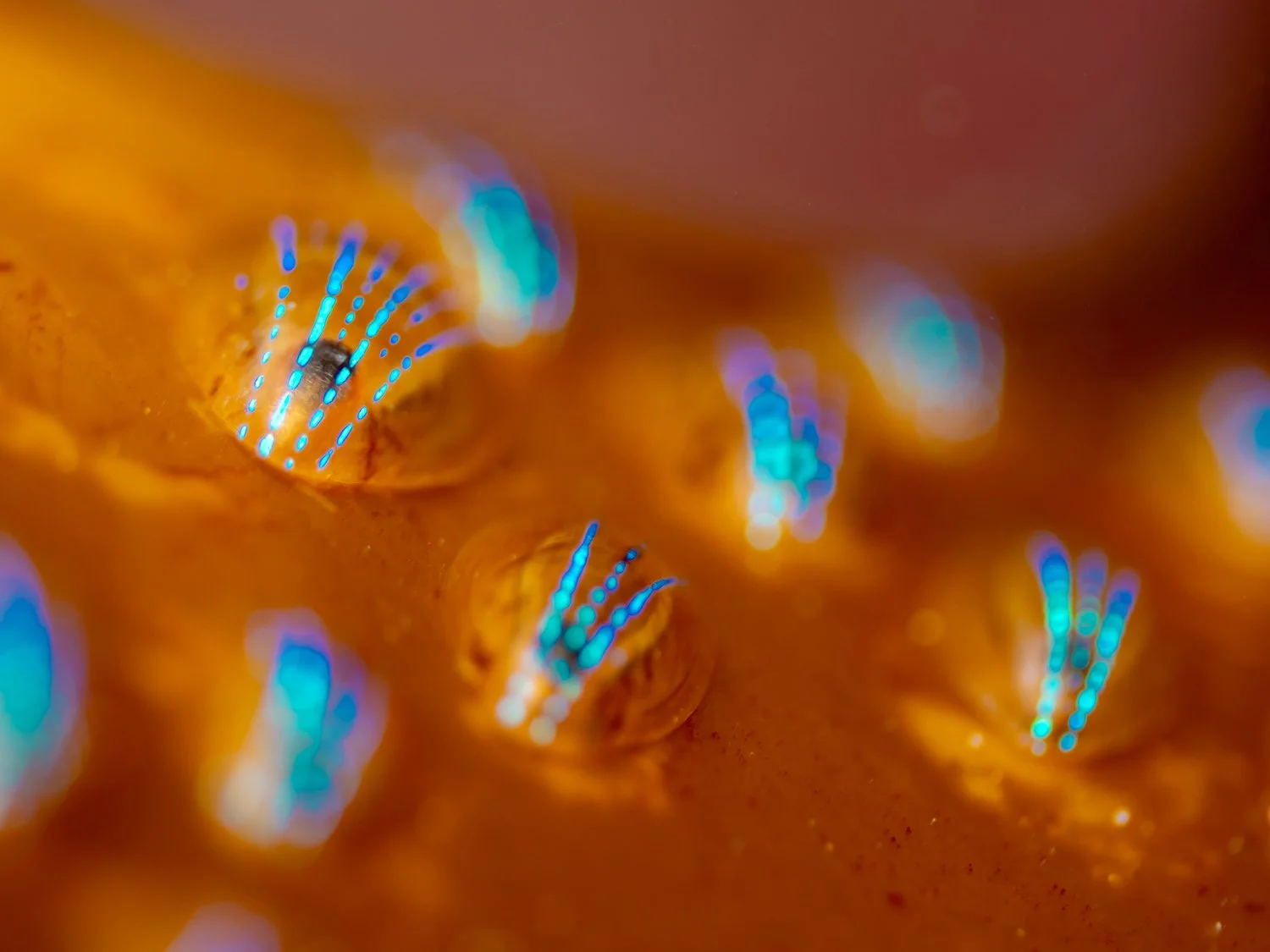
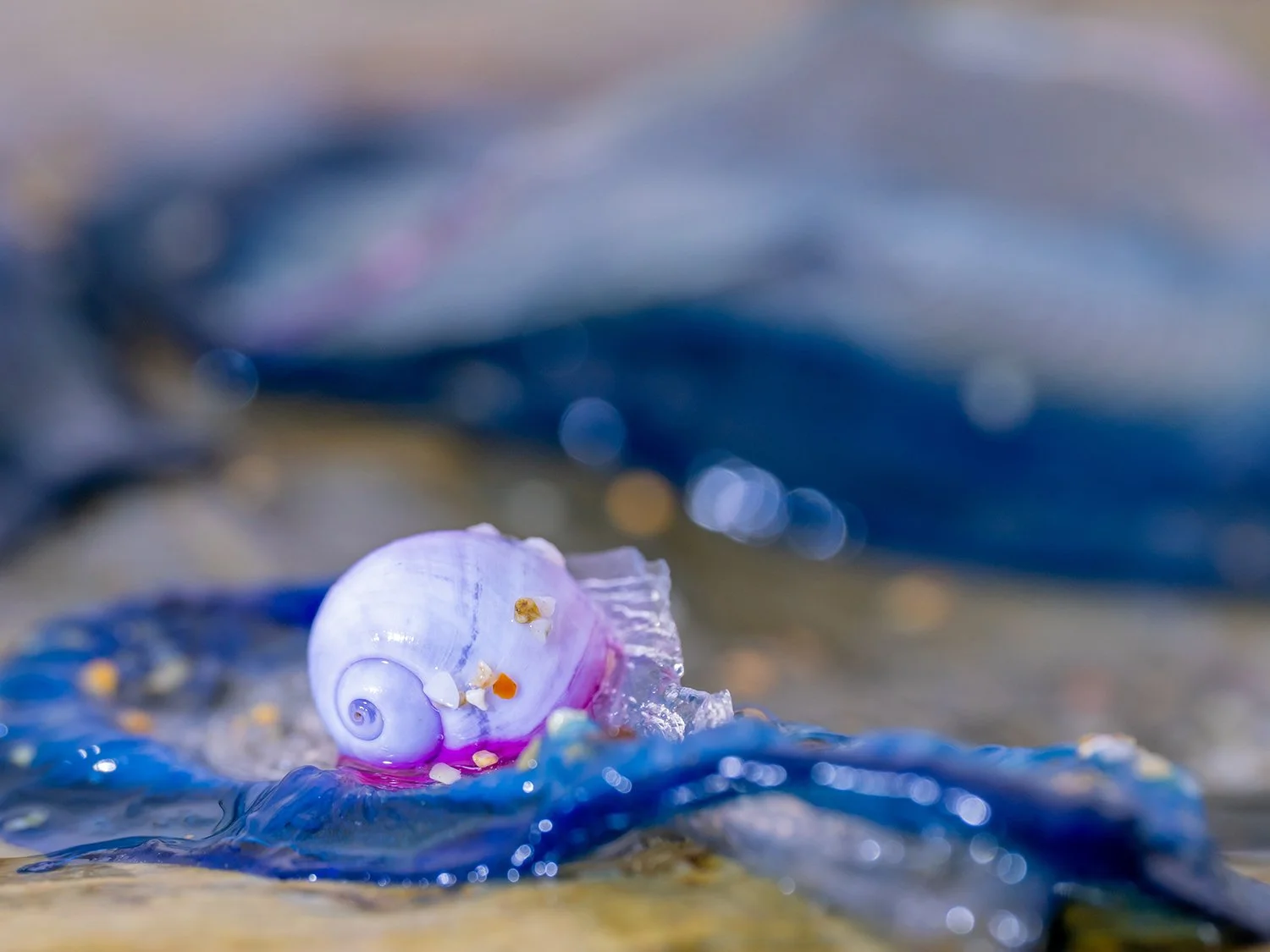
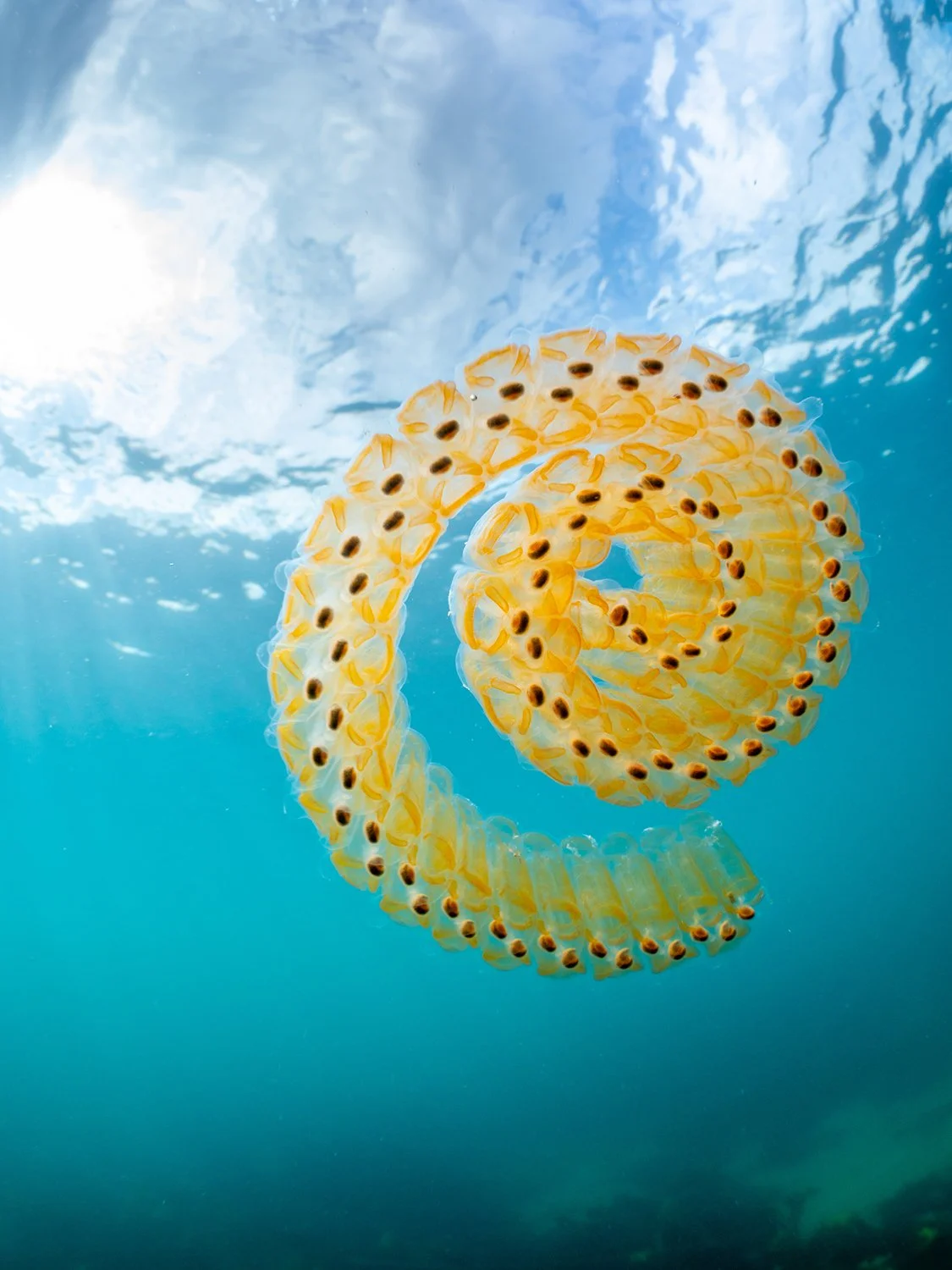
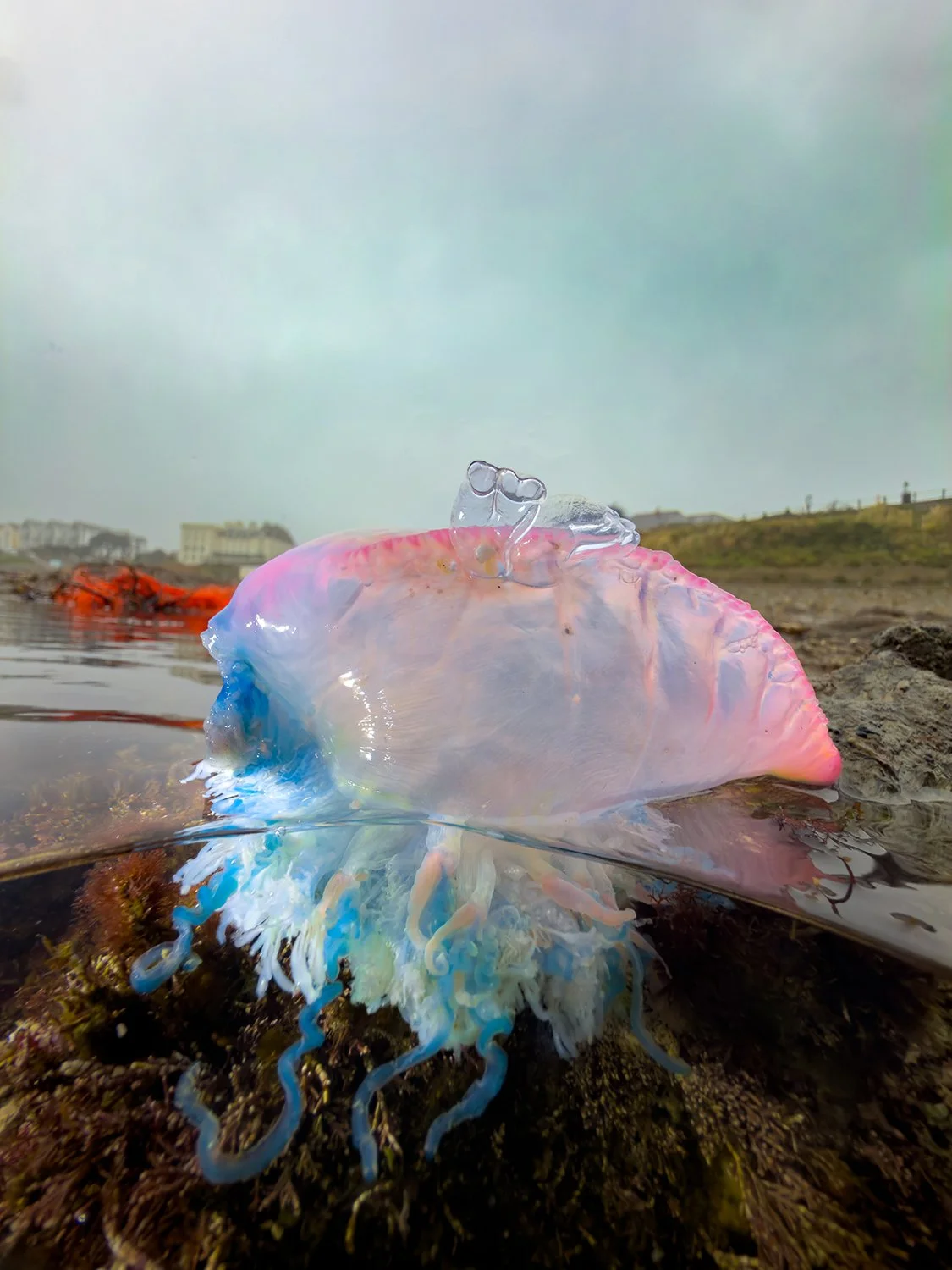
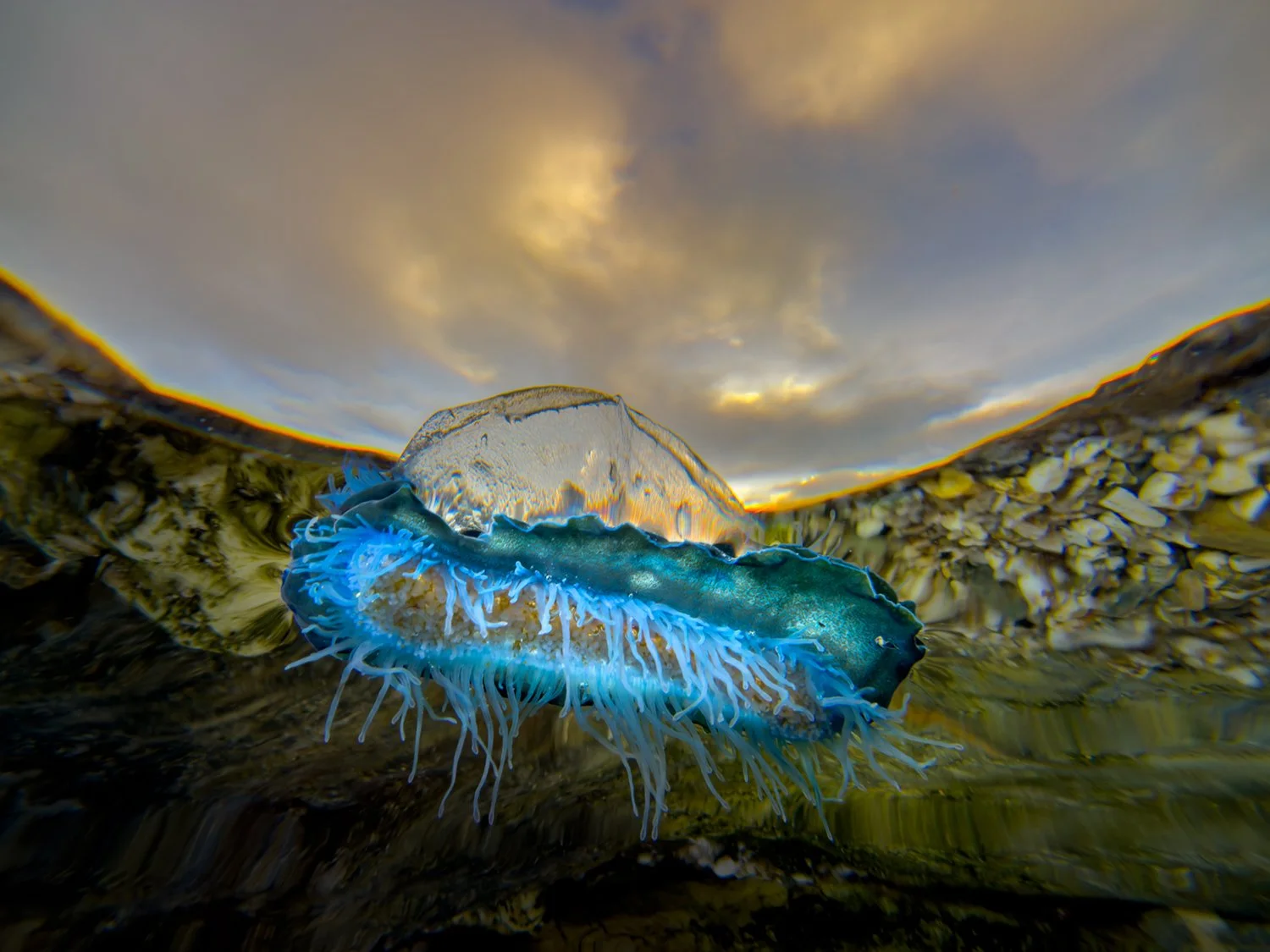
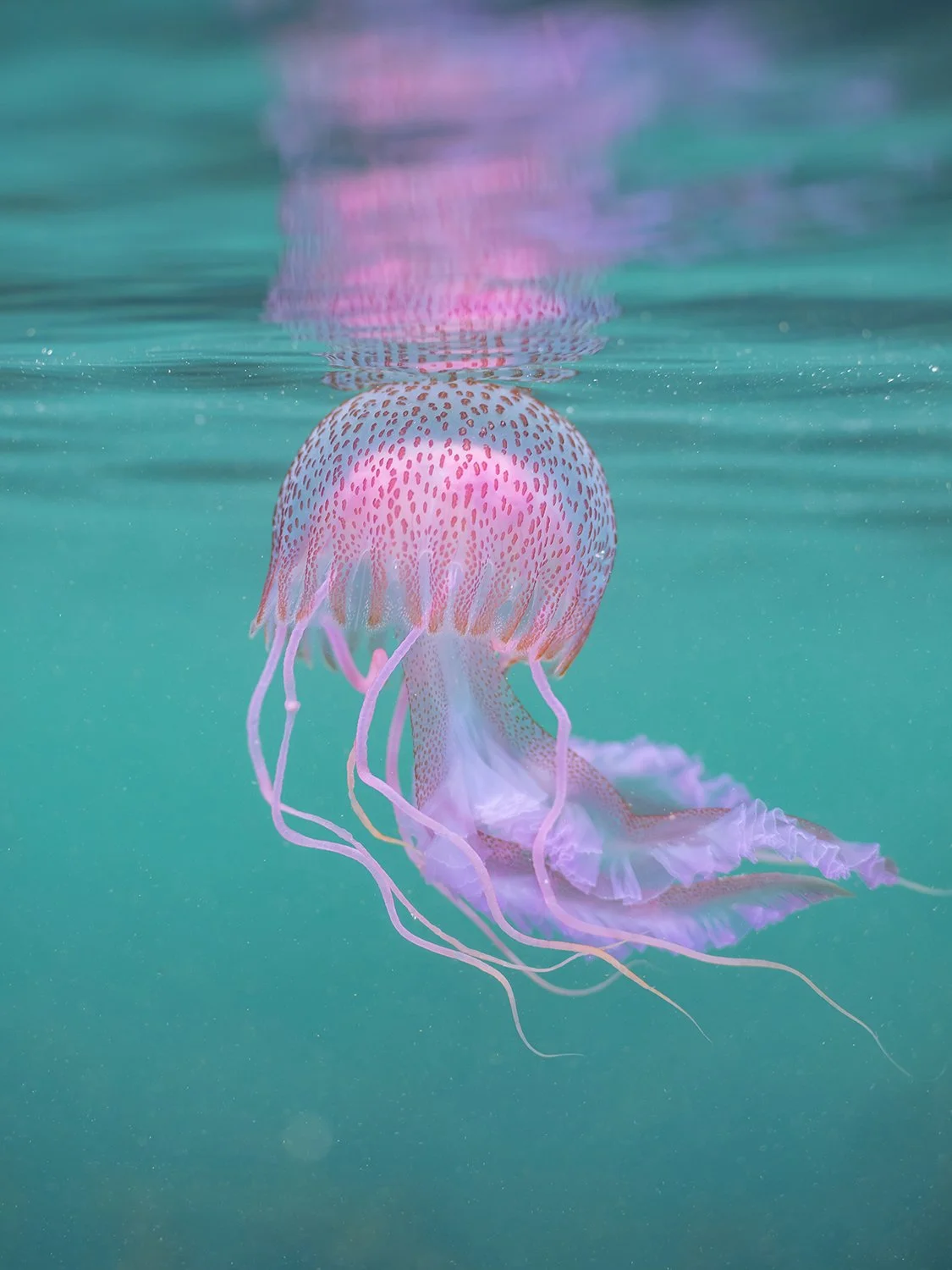
As autumn moves on, the weather starts to change and storms roll in. Beautiful blue-rayed limpets, just 1 cm in size, gather on the kelp in small groups to ride out the strong waves and swell, and bigger storms bring all sorts of strange visitors inshore. These include large swarms of mauve stinger jellyfish, salp chains (a type of sea squirt), and siphonophores including the infamous Portuguese Man O’War. Sometimes, large numbers of by-the-wind sailors can wash up around the coast, and on really lucky occasions it’s possible to find a rare violet sea snail feeding on them.
Winter
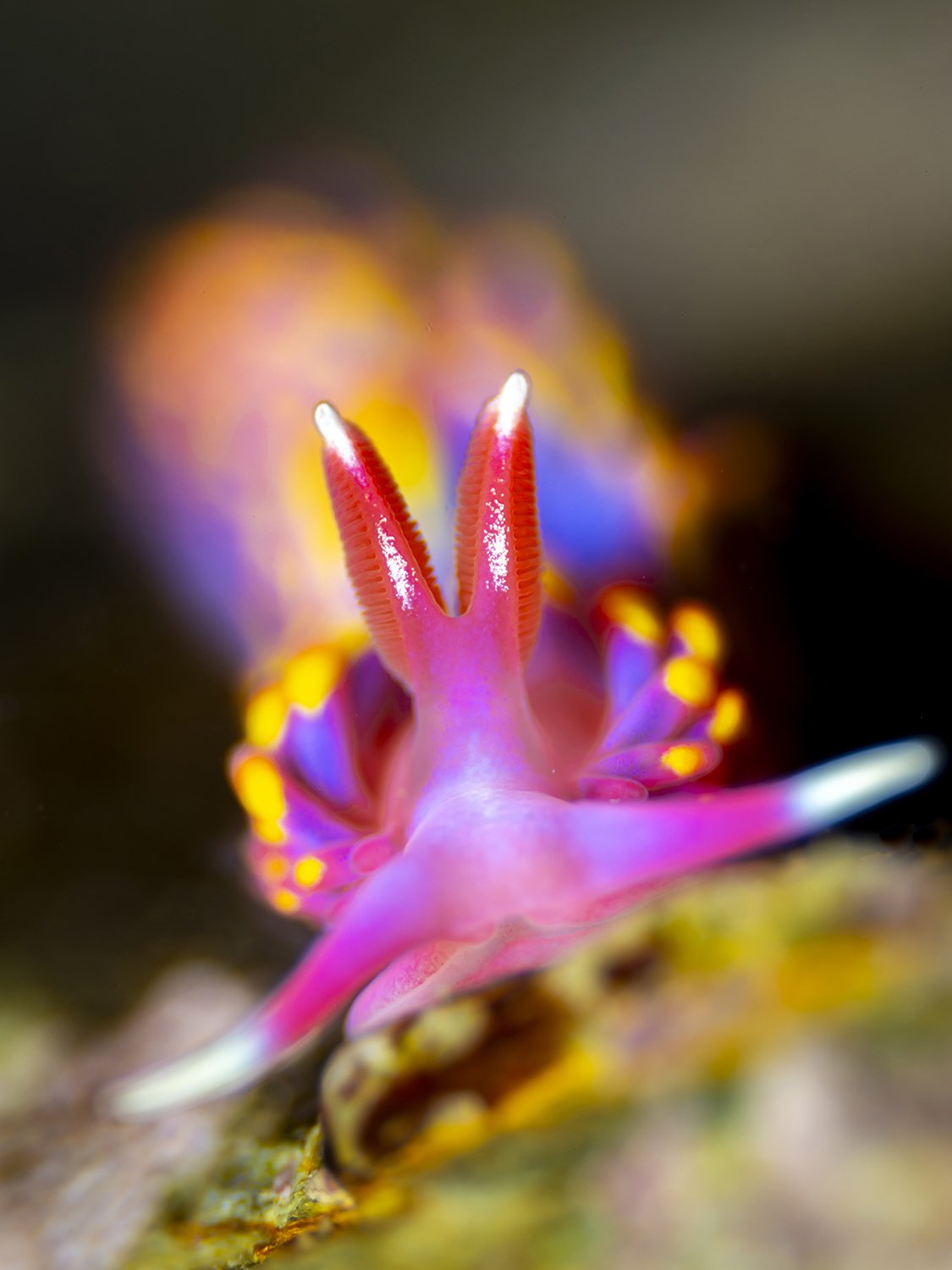
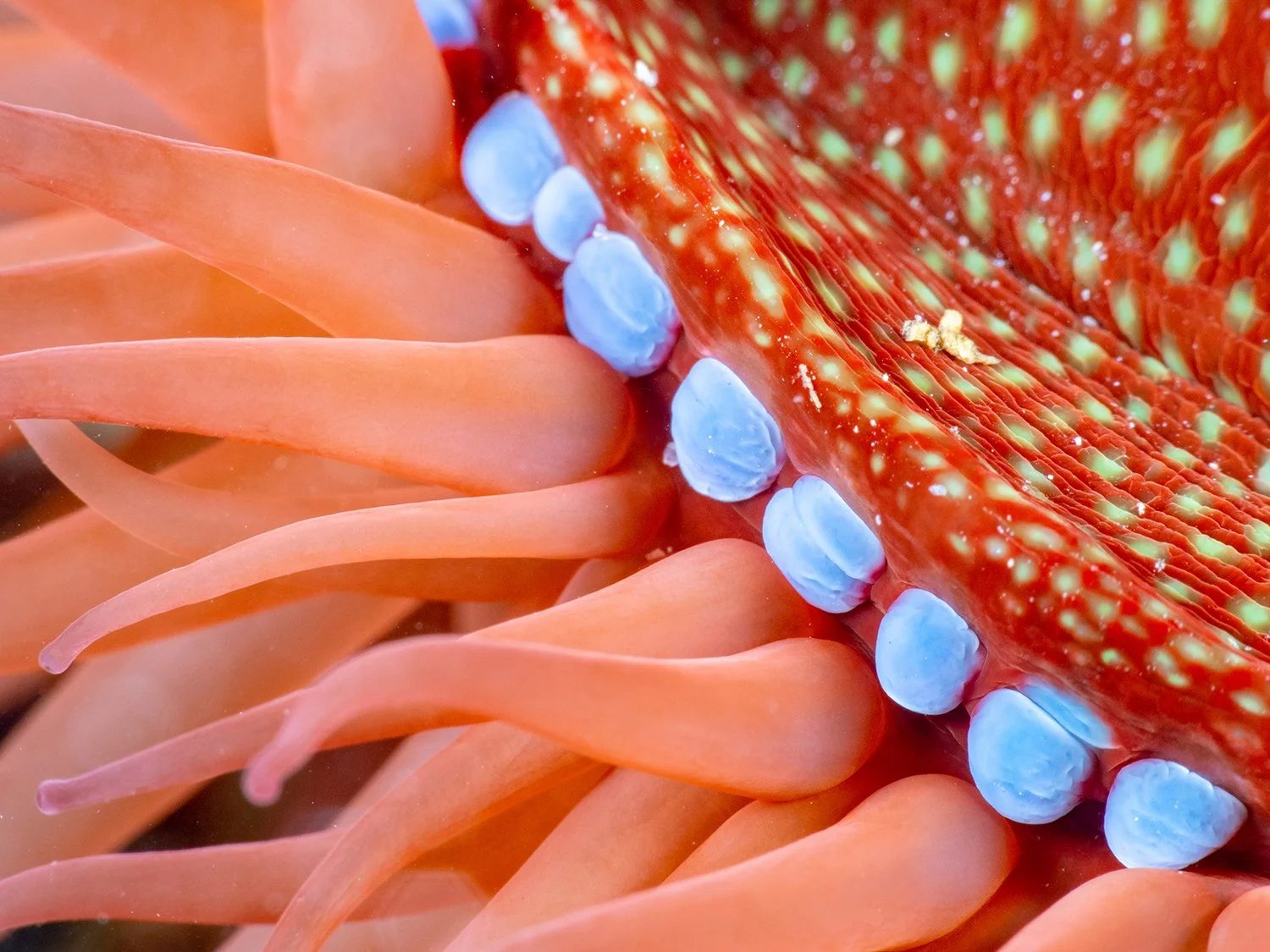
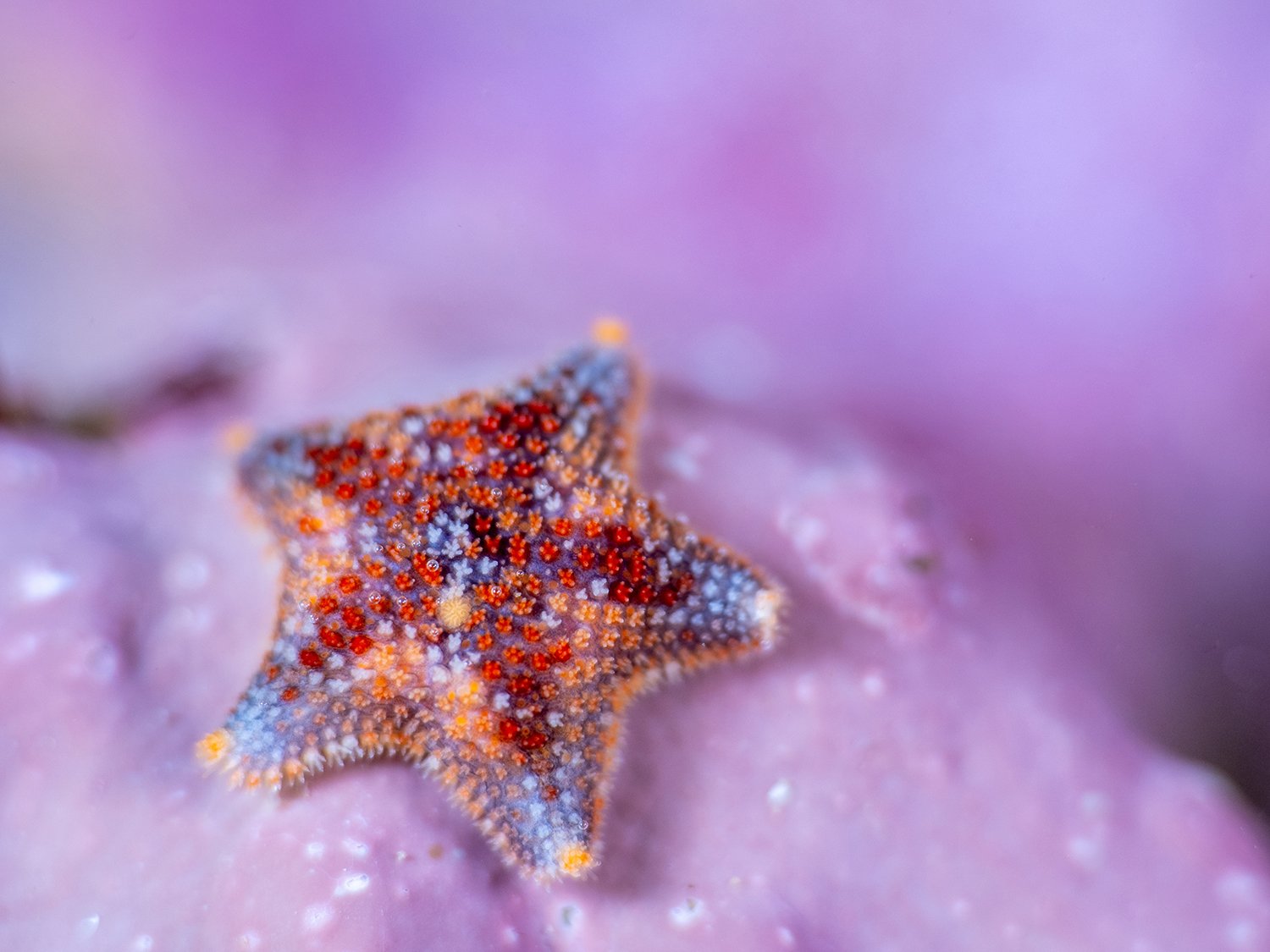
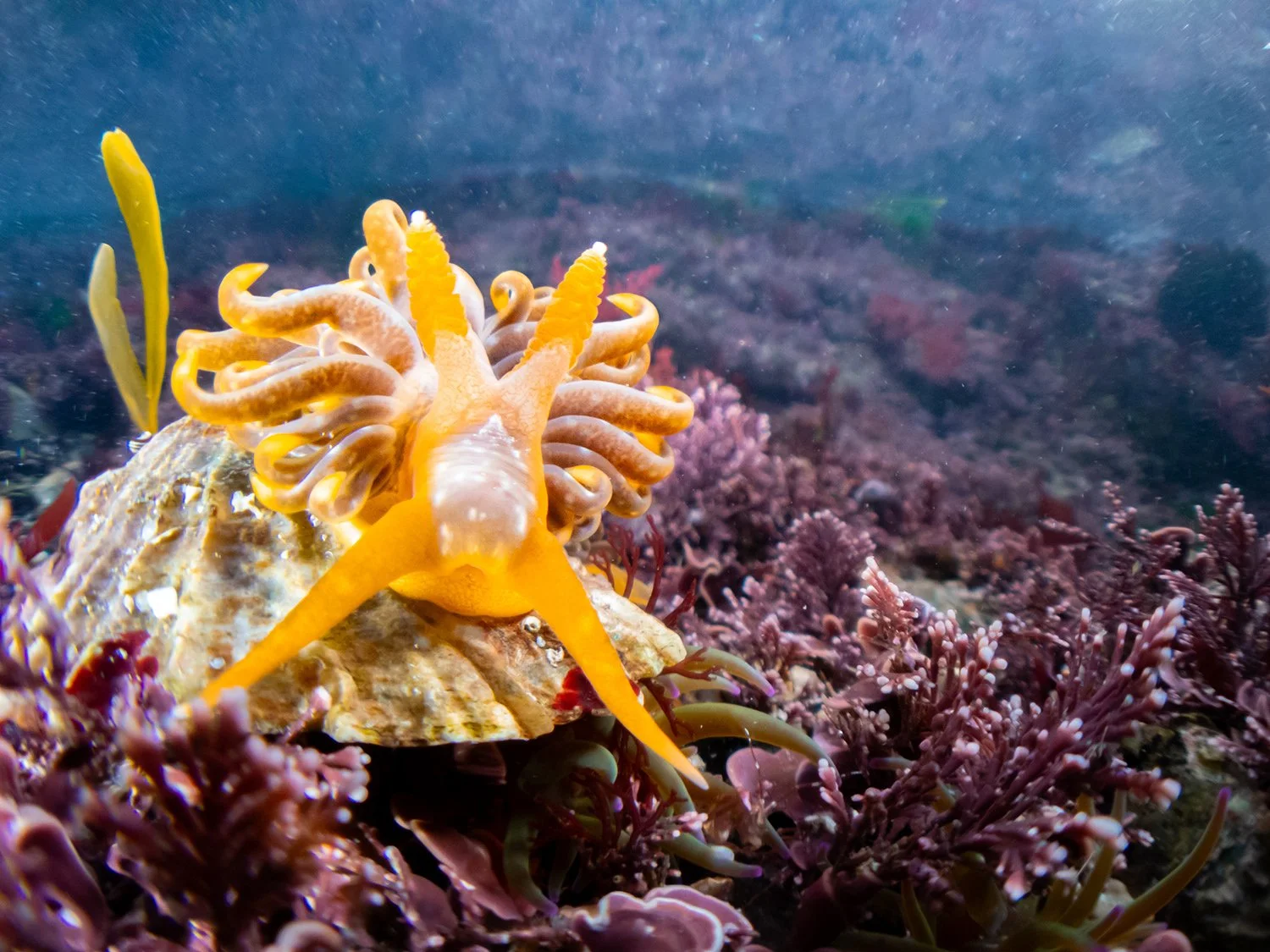
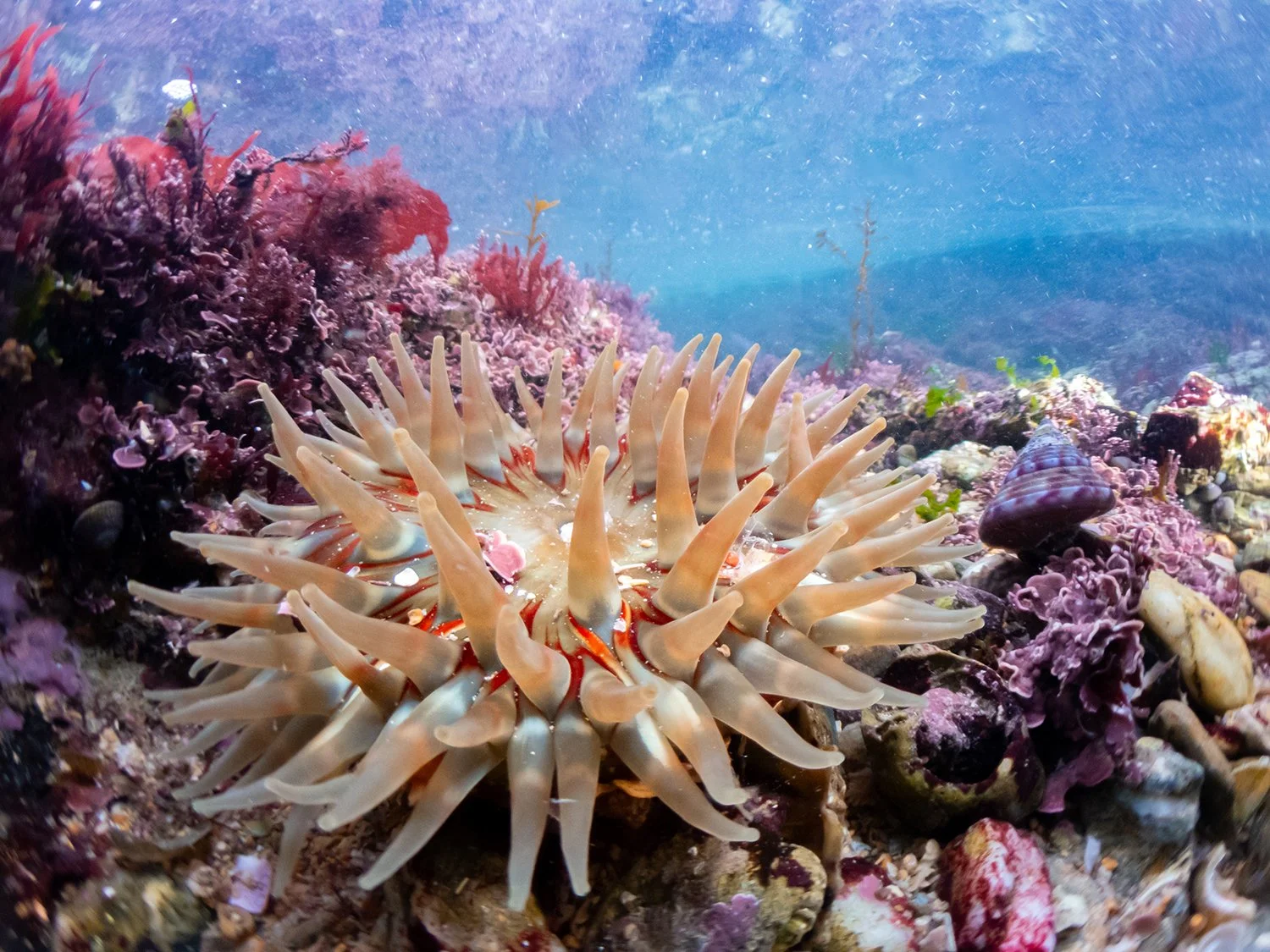
Winter mixes some of the roughest weather, punctuated by periods of calm, with much life sheltering in deeper water. But there’s still much to see, especially in shallow waters. As the seaweed dies back, it exposes beautiful dahlia anemones hiding in pools, and several species of sea slugs remain active. Remarkably, that includes the stunningly colourful rainbow sea slug - a new arrival to UK shores and becoming more common in parts of Cornwall. Other anemones, such as strawberry anemones, are also easy to spot, and among the pink upper shore pools are tiny cushion stars, marked with intricate patterns. Then, as the sun begins to warm, the seaweed starts to grow back and more life returns again.