
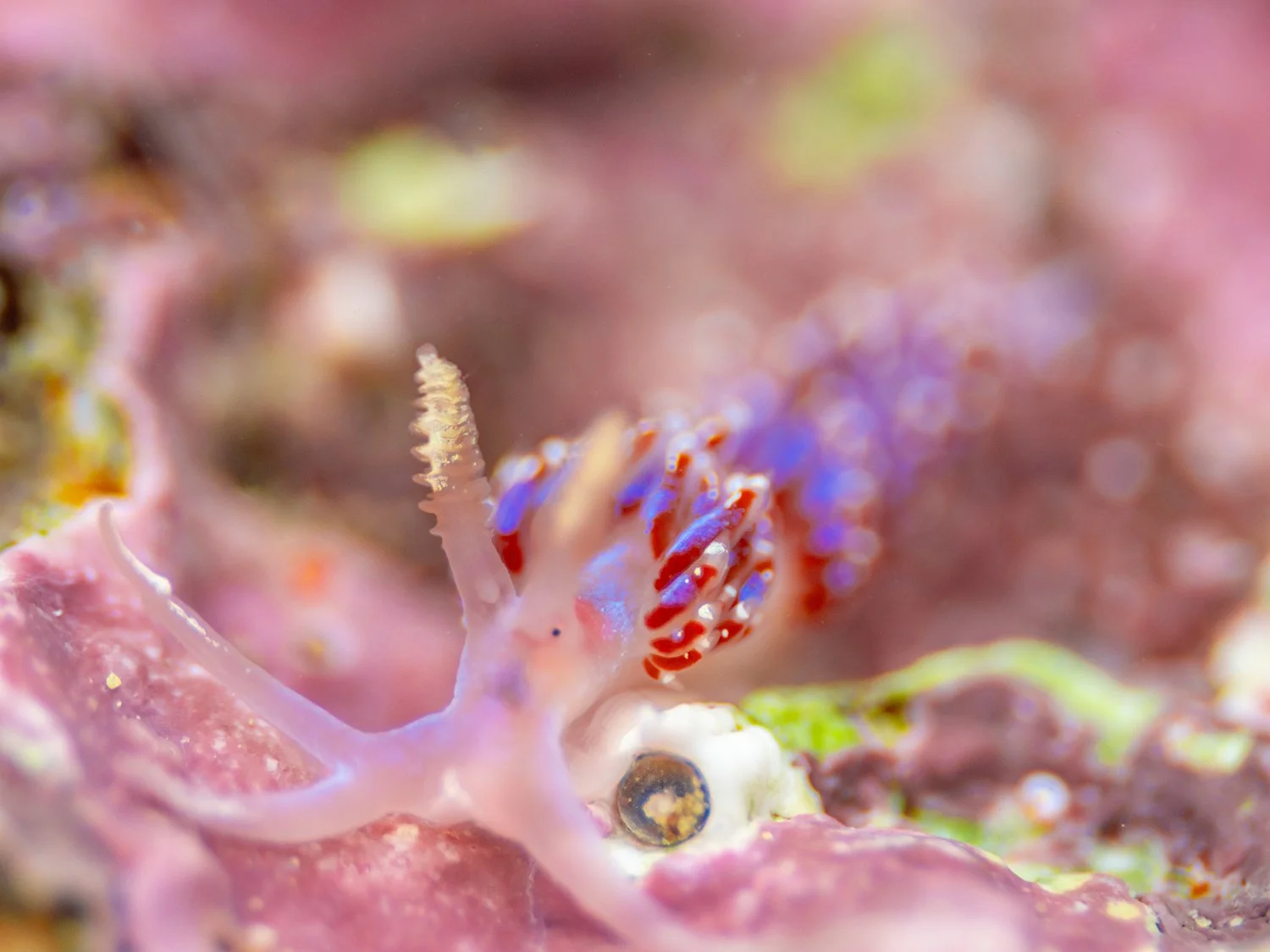
Facelina auriculata on rainbow wrack
(Blog originally posted in 2023 but updated spring 2026 - after finding many more species!)
Be sure to read to the end where there’s a video all about the sea slugs I recently made.
So colourful, so tiny!
Sea slugs are a favourite subject for underwater photography, and for good reason. We have an incredible variety in the UK, especially in Cornwall; in fact, there are over 100 species found here, and in the last few years some rare and new arrivals. A question I get asked a lot is where to find them, especially in rock pools. If you don't dive a lot, or spend much time in the tidal pools looking for creatures, it can be surprising just how many of these fascinating animals we have. Some slugs can be found all year round, others for just for a brief interval. Some you just have to be super lucky.
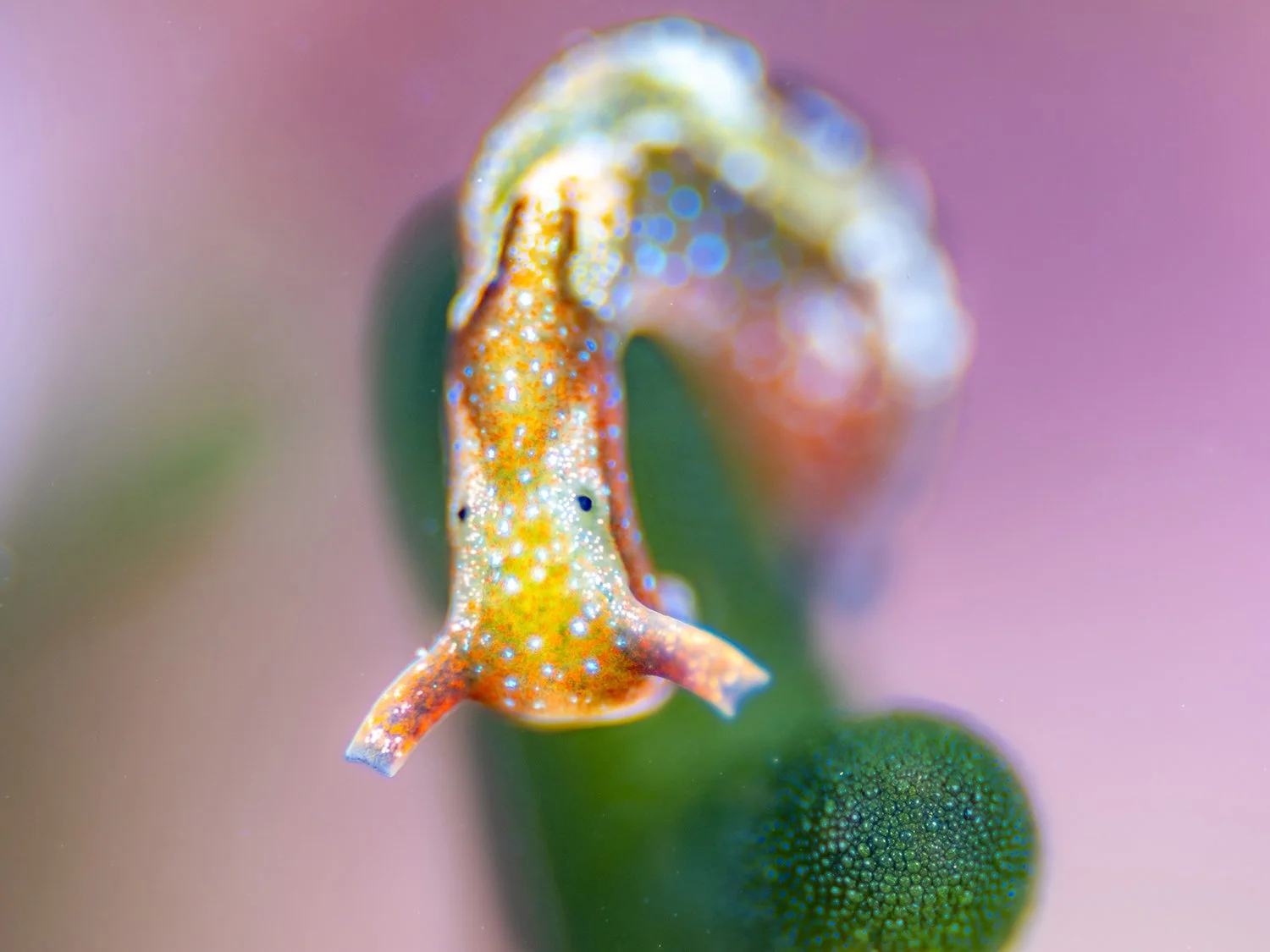
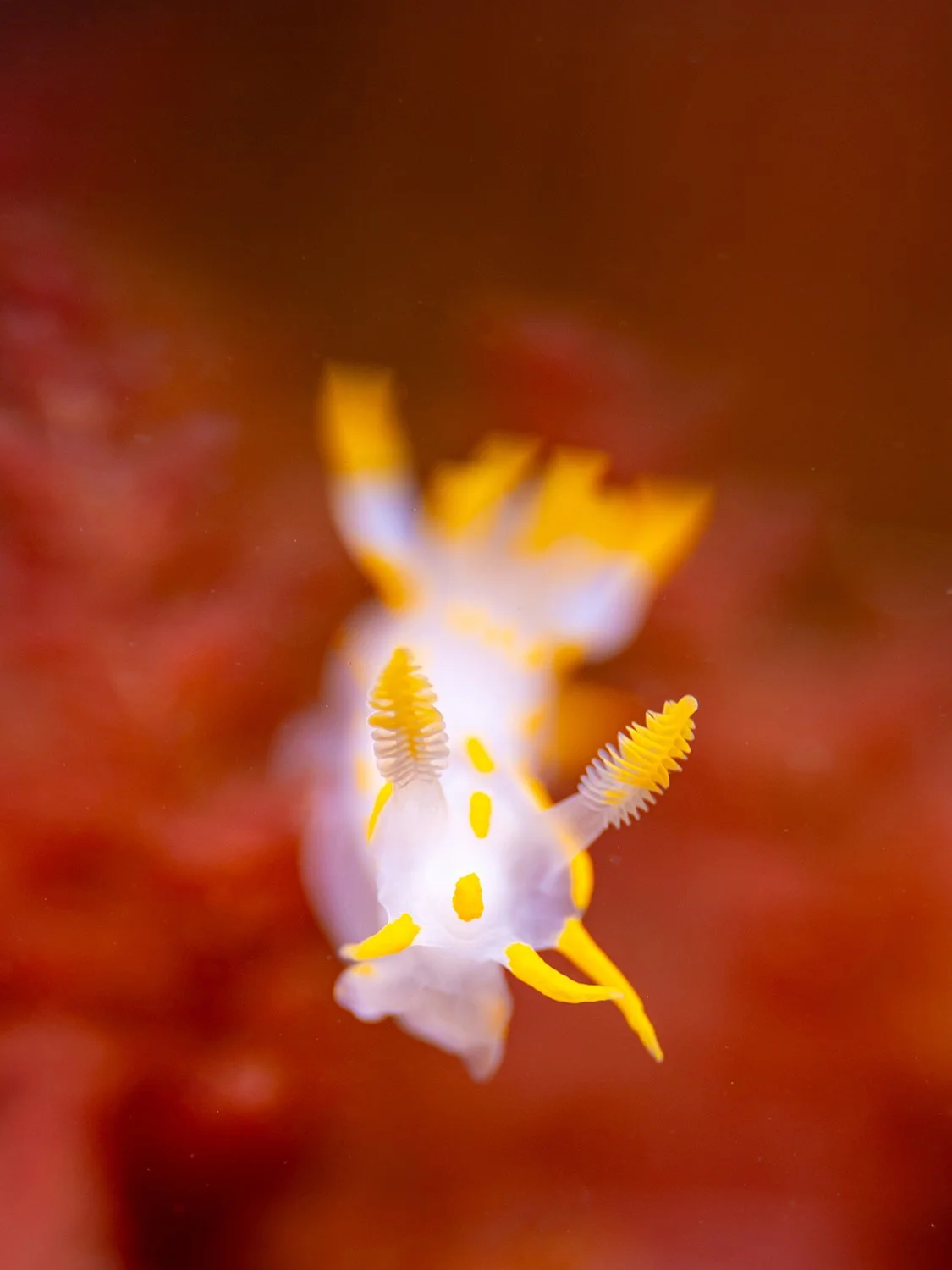
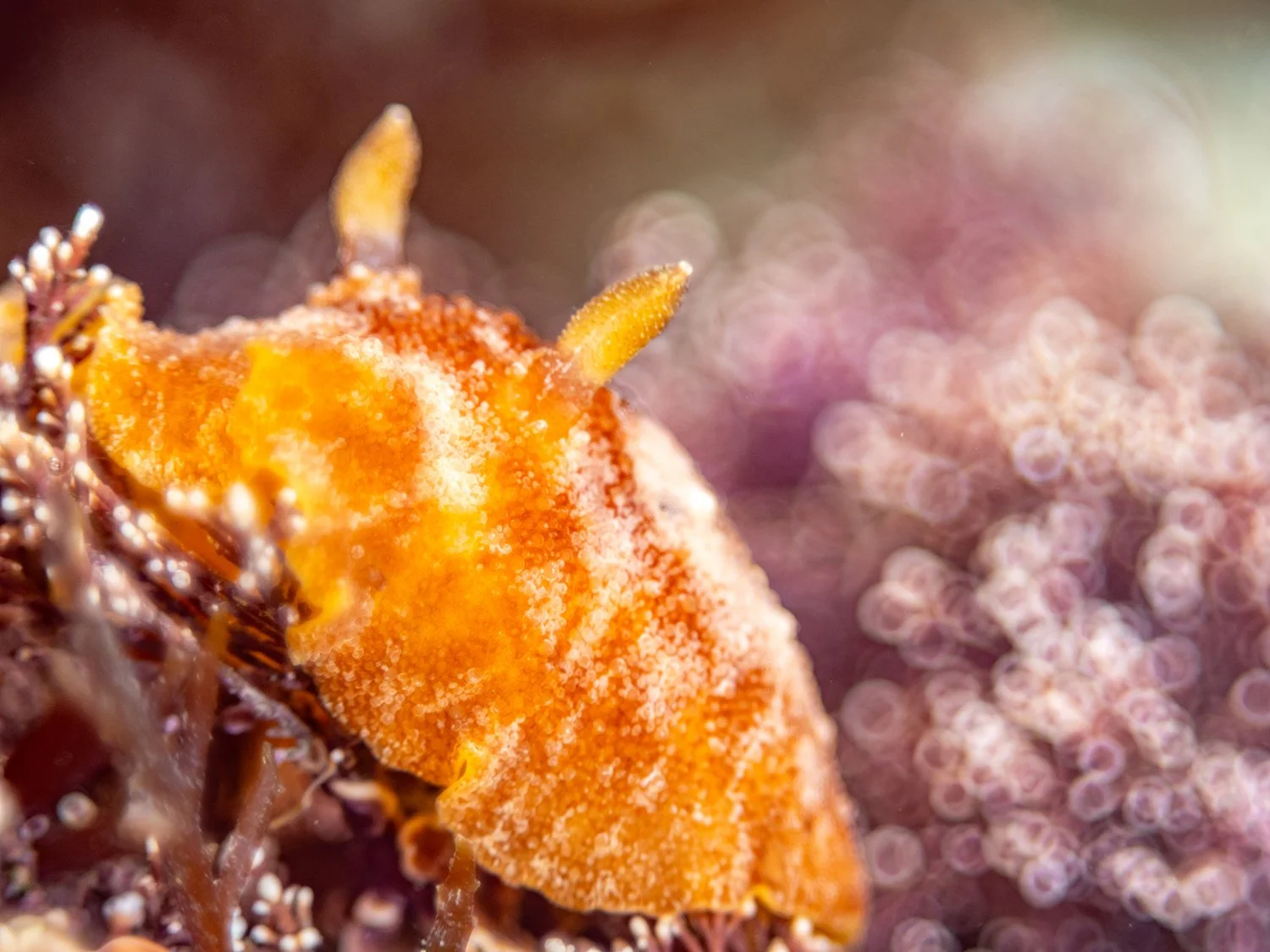
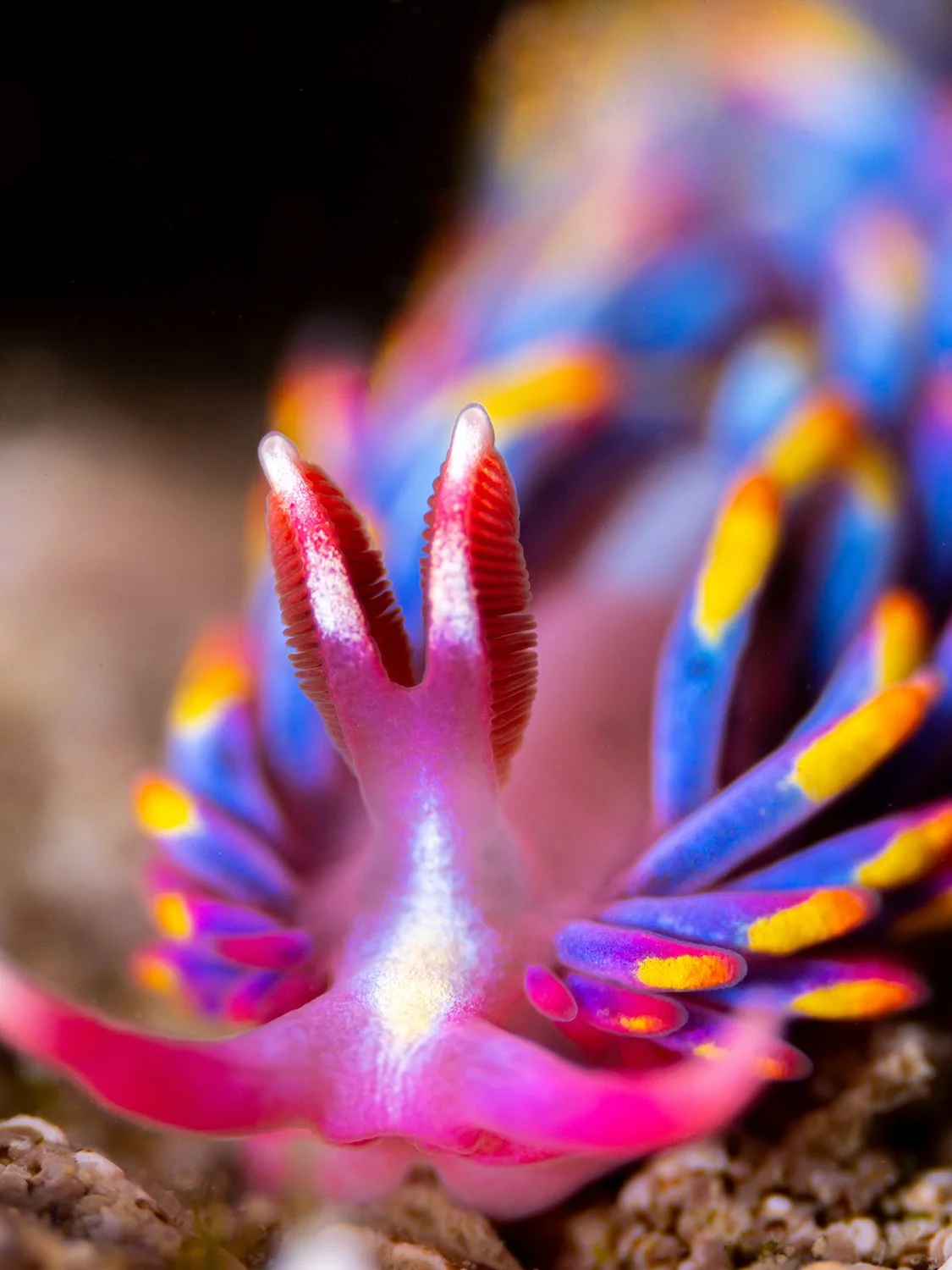
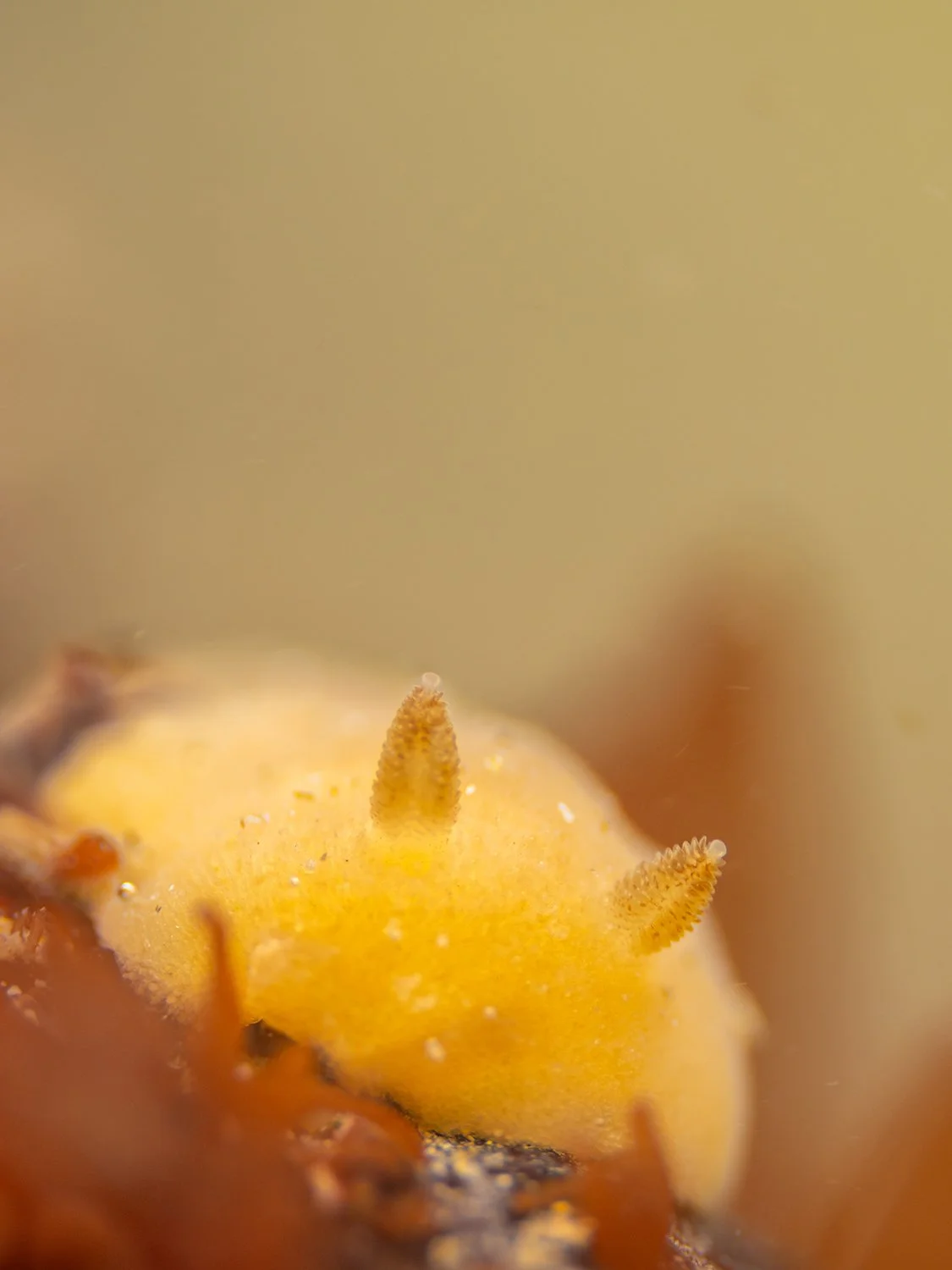
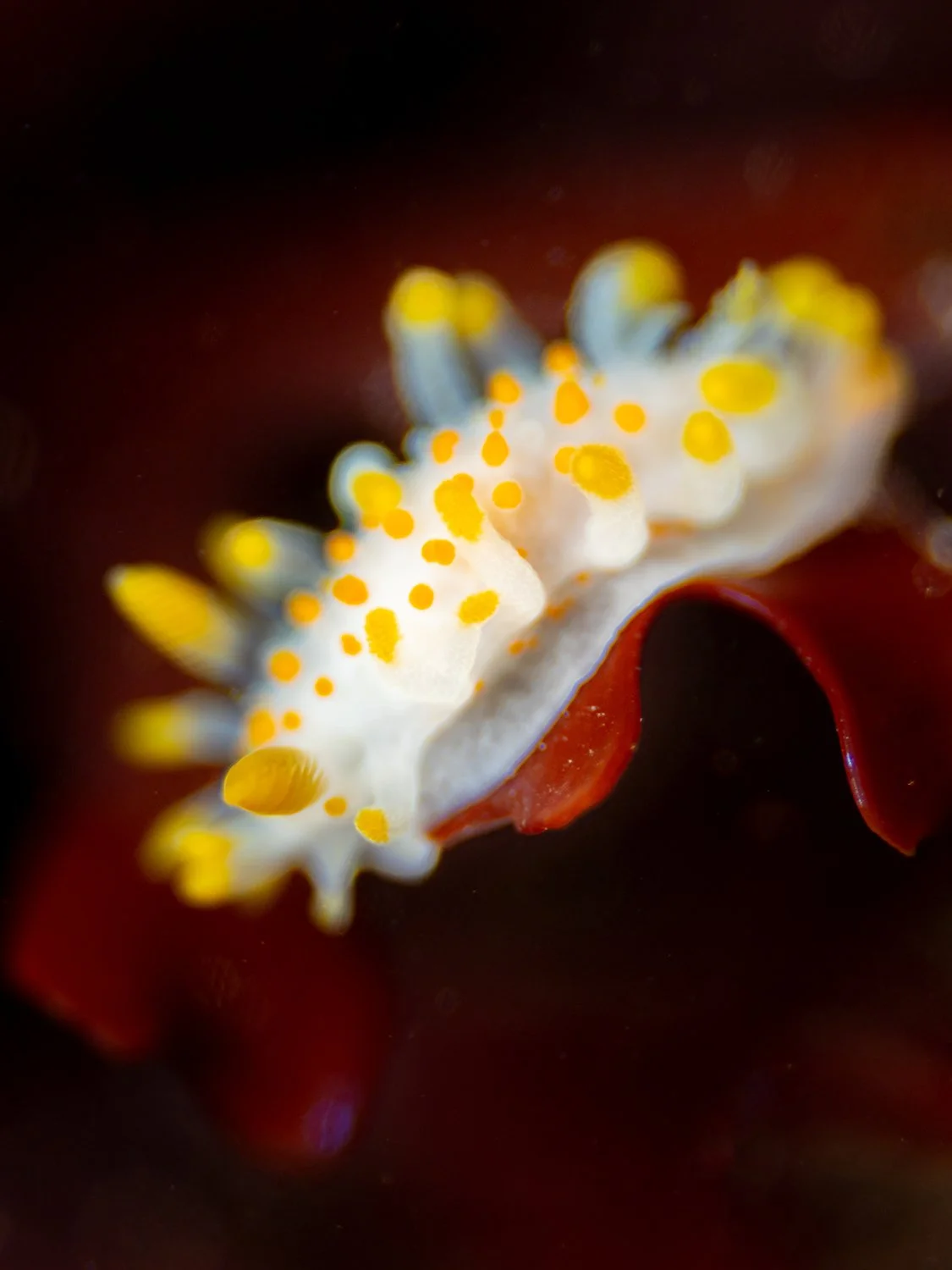
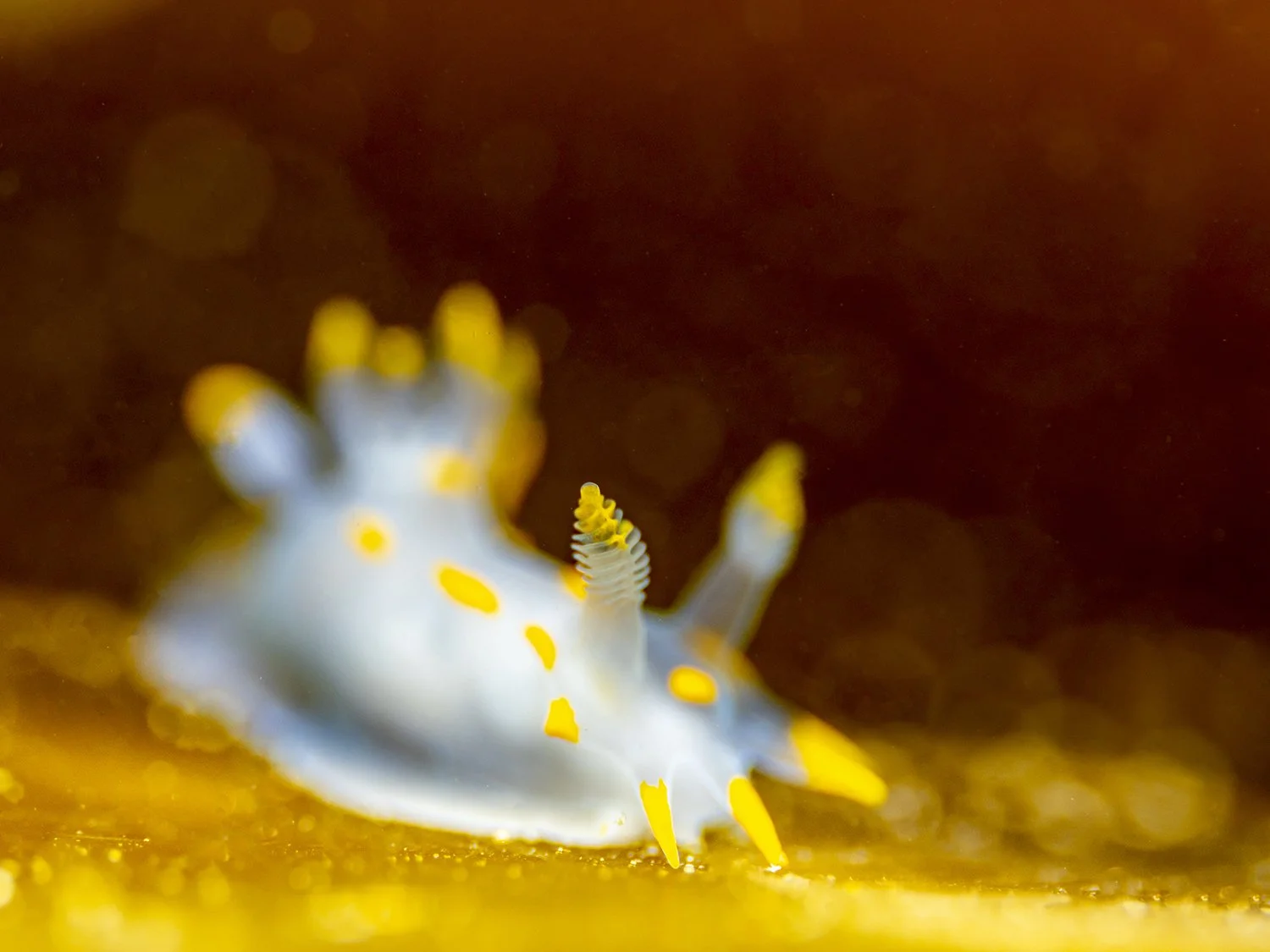
One trick with sea slugs is to look close to the types of food they like to eat (hydroids, sponges, eggs of other creatures...), and think small, very small! Aside from a few (like the grey sea slug) most UK species are just a couple of cm long, or less. I normally take supermacro photos of them, given their size. I don't always see them directly on their food, but often close to it. Then it's a case of looking for something tiny and colourful. In rock pools, slugs are often crawling on and around weed or rocks. Some are common locally, such as the orange-clubbed sea slug and sea bunny (Jorunna tomentosa), which are often on seaweed, and solar-powered slugs (Elysia viridis), which I almost only ever find on Codium seaweed.

Jorunna tomentosa on ‘pompom’ weed
Then there are some really unusual and rare species, of which two deserve special mention. First, the goby egg-eating sea slug, which as its name suggests eats only the eggs of goby fish. The species, until recently, had only a handful of records in the UK, but I've been lucky enough to find half a dozen or so in the last few years right here in Falmouth. To locate them, the only real approach is find the eggs of rock gobies (often on or under rocks and ledges) and then look very closely. The slugs are tiny and extremely well camouflaged - their cerata (the elongated 'fingers' on a slug's back) look just like fish eggs, even marked with two dark spots like eyes. What blows my mind is how these tiny slugs disappear for most of the year somewhere in the vast expanse of ocean, only to appear at exactly the right time in spring, and make their way to the goby eggs to feed on them and mate. I've even seen the baby fish wriggling and hatching early, darting up into the water to escape their nemesis as it approaches, like a slow-mo predator-prey sequence. There's at least one other uncommon species locally that also eats fish eggs (mostly clingfish eggs), Calma glaucoides.
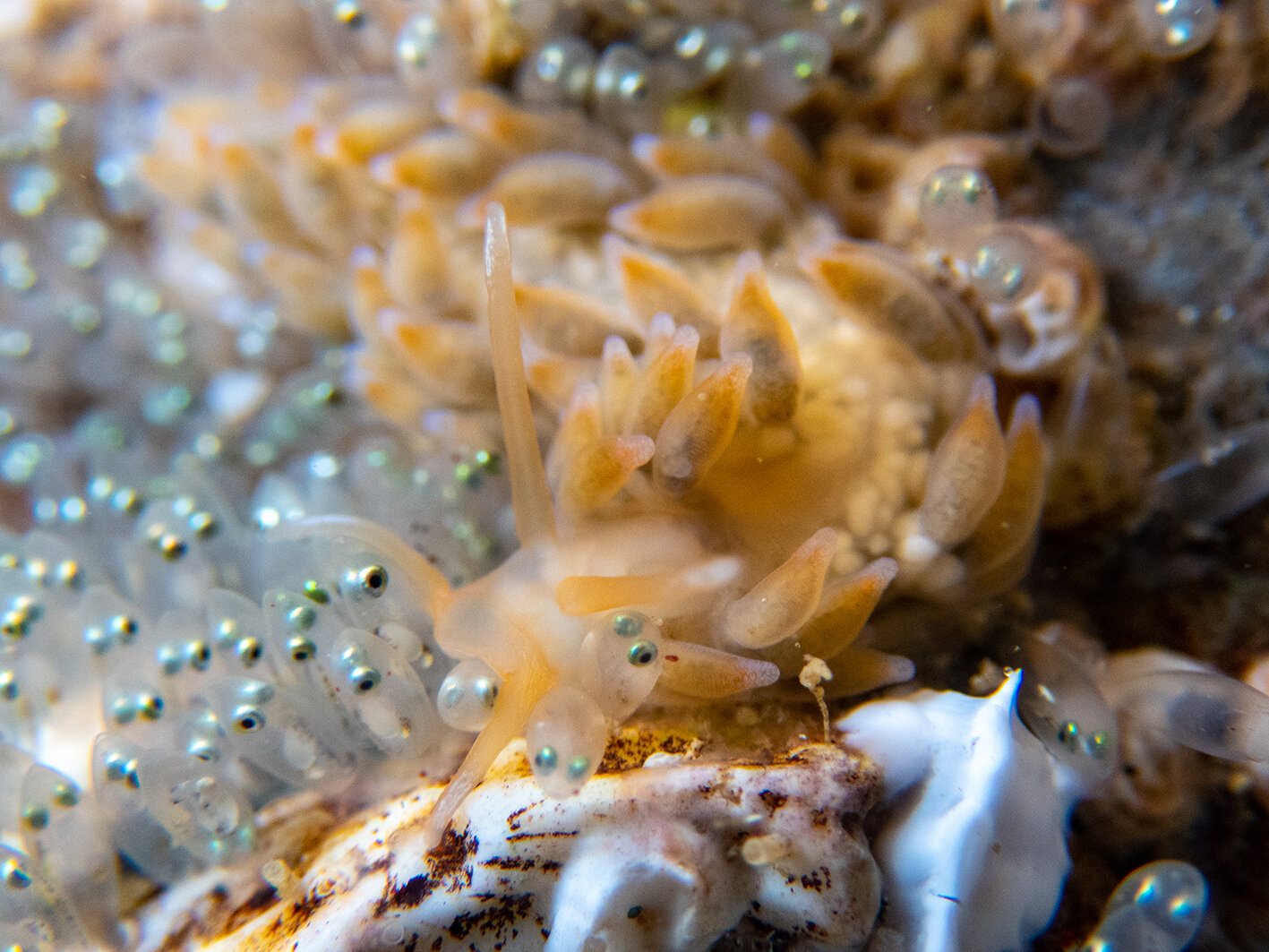
A goby egg-eating sea slug in the process of munching on fish eggs
Probably the most special species that I've found is the rainbow sea slug. This incredible looking animal, resembling a gaudy shop sweet, was first seen in the UK in 2022 with two reports from the Isles of Scilly. I was fortunate enough to find not one but three of them on a spring tide at the start of 2023. They're normally found south of the UK, and their appearance, first on the Scillies and now on the mainland suggests that they’re spreading quickly as the waters warm with climate change. Since then, each year I find more and more of them - so far at the time of updating this (spring 2026) I’ve seen 12 already this year.
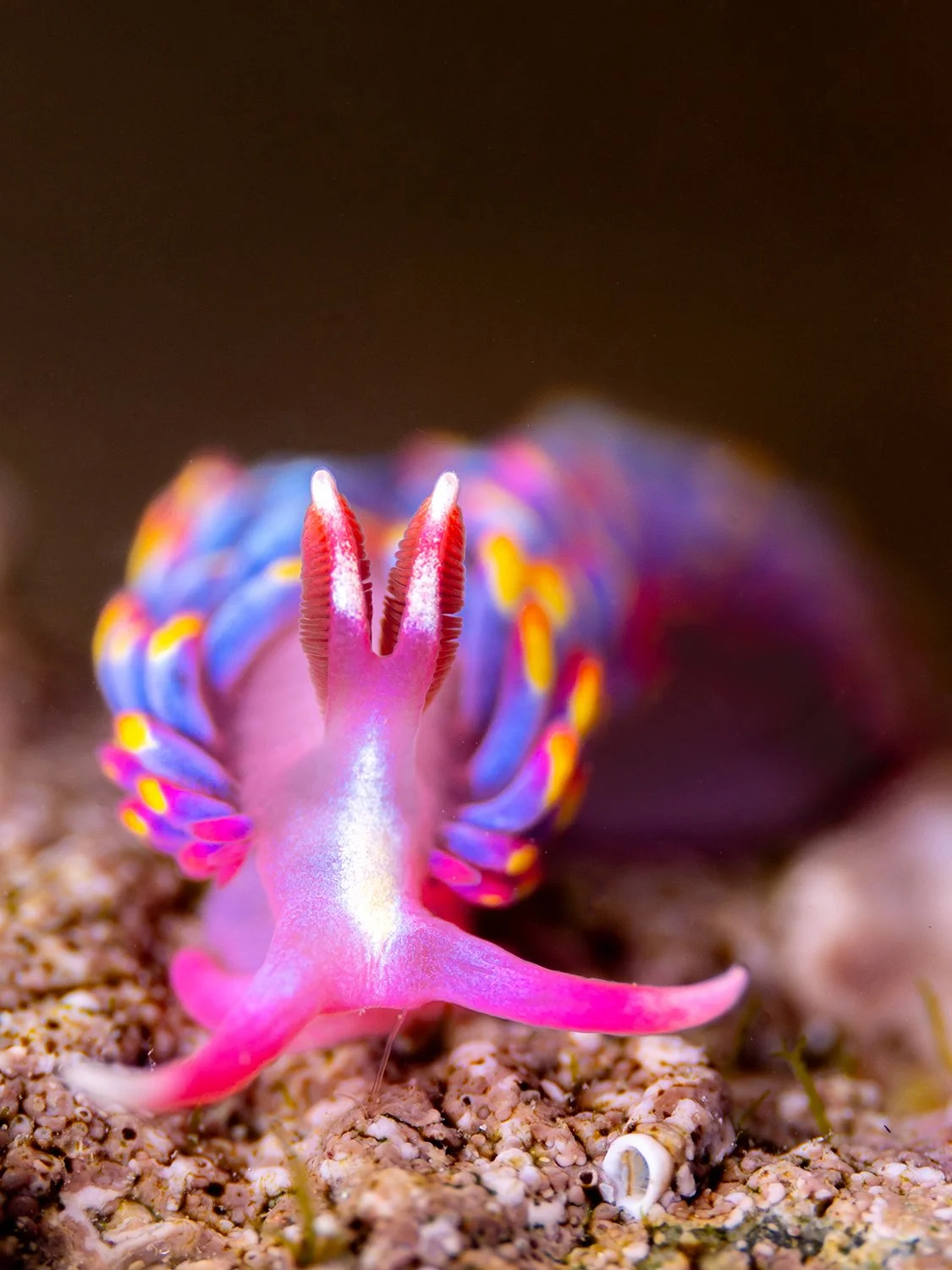
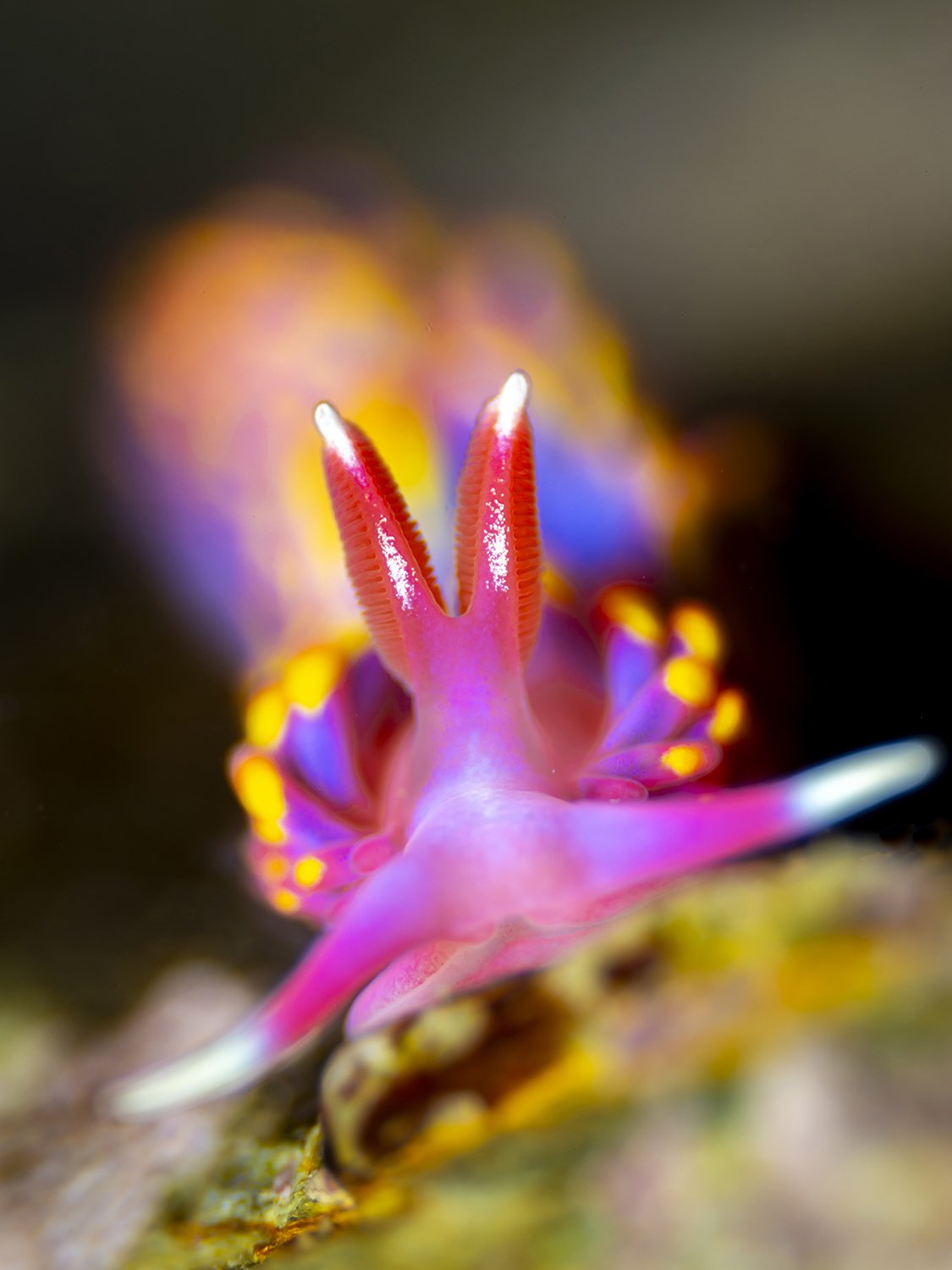
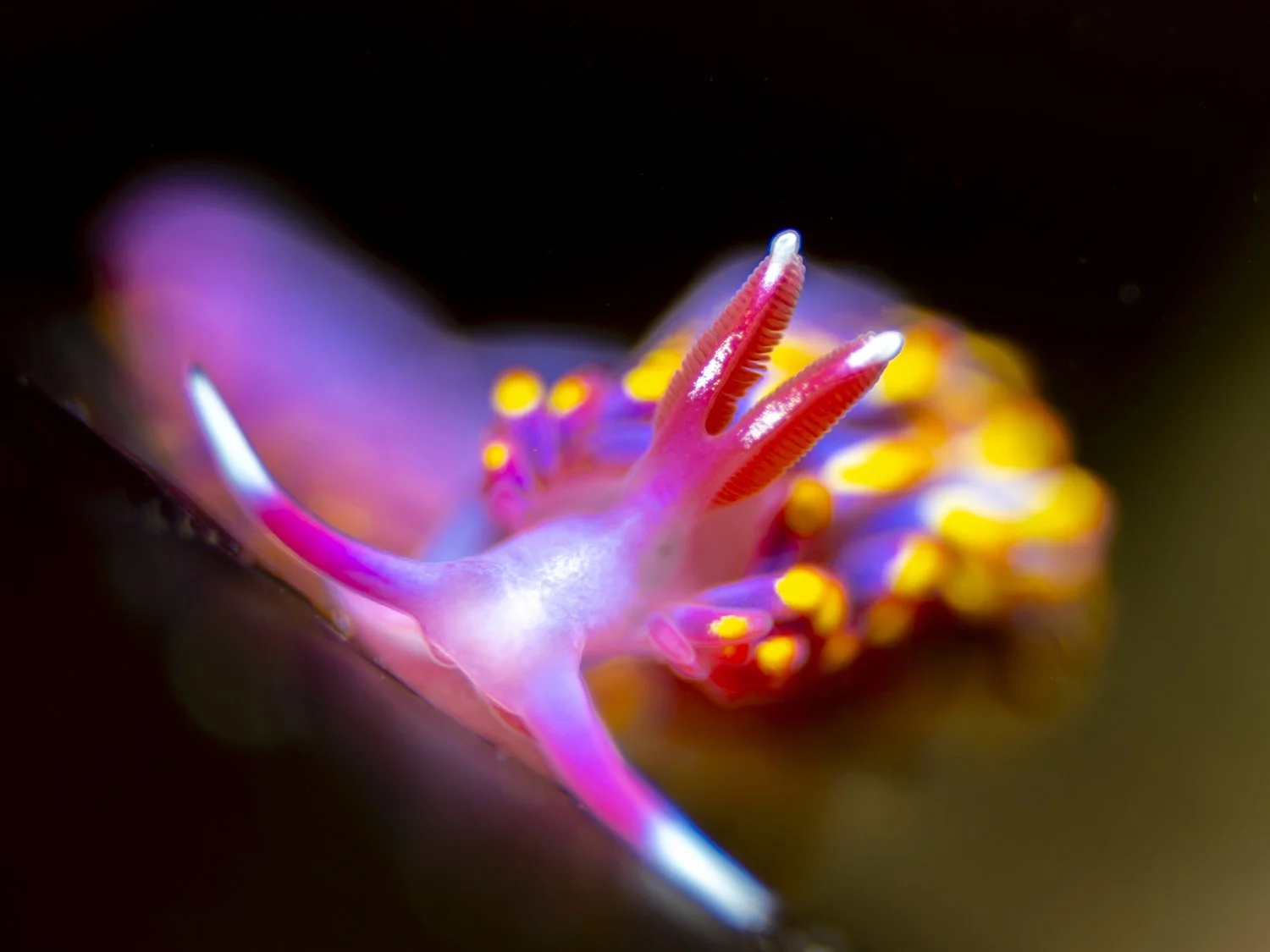
Sea slugs are truly incredible in both appearance and how they live. Some species, like the grey slug, eat sea anemones and then reuse the anemone stinging cells by putting them into the slug’s cerata for protection. Others, like the solar-powered slug take the chloroplasts from algae they consume, which continue to photosynthesise and generate energy inside the slug’s body. In the last few years there have been more and more species turn up locally that were once either rare, or never before recorded in the UK; not just the rainbow slug, but other species such as the hair curler slug, which also was first recorded in the UK in Falmouth in autumn 2025 and has since become common locally - obviously something in the water here that the slugs love!
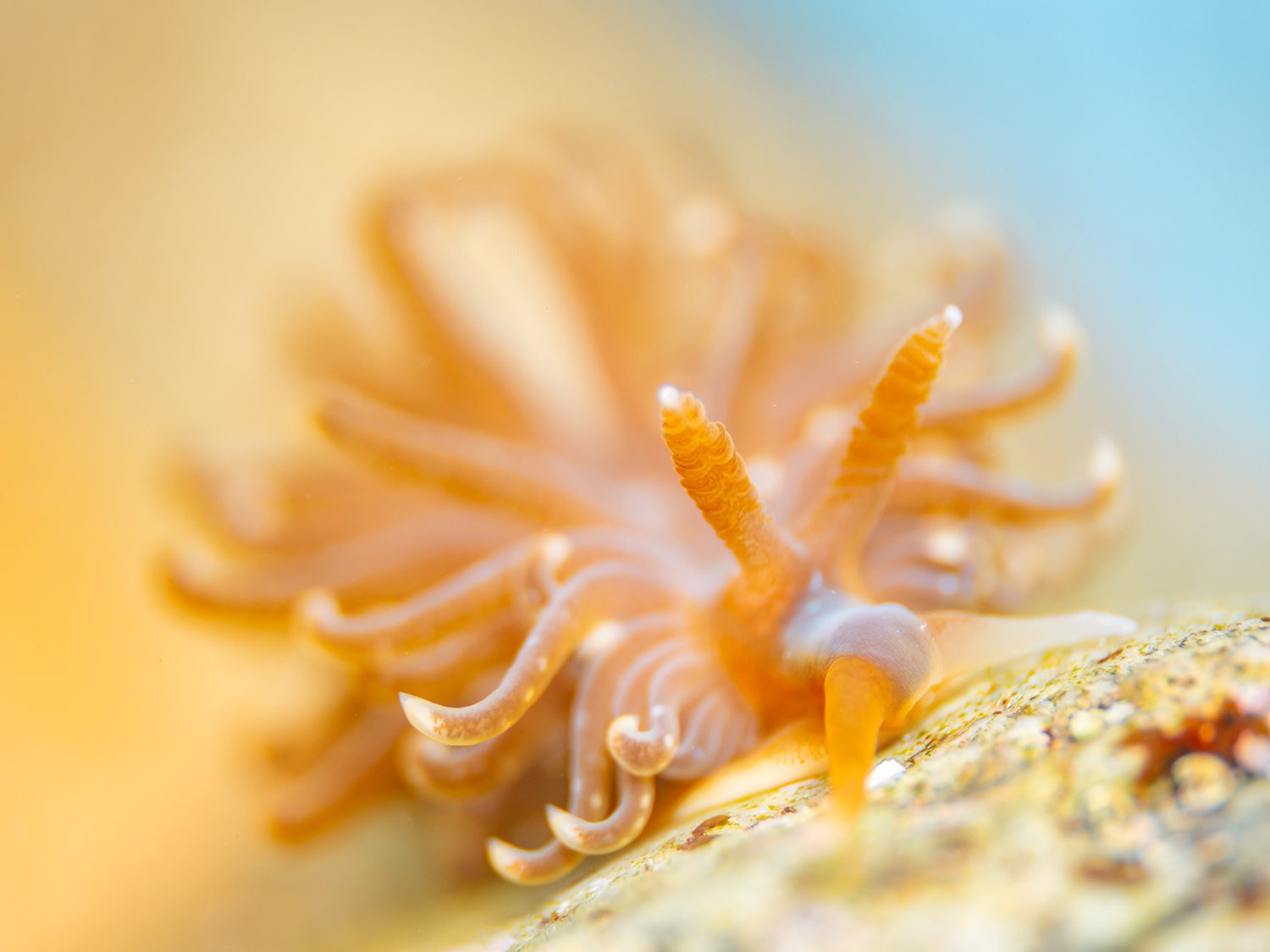
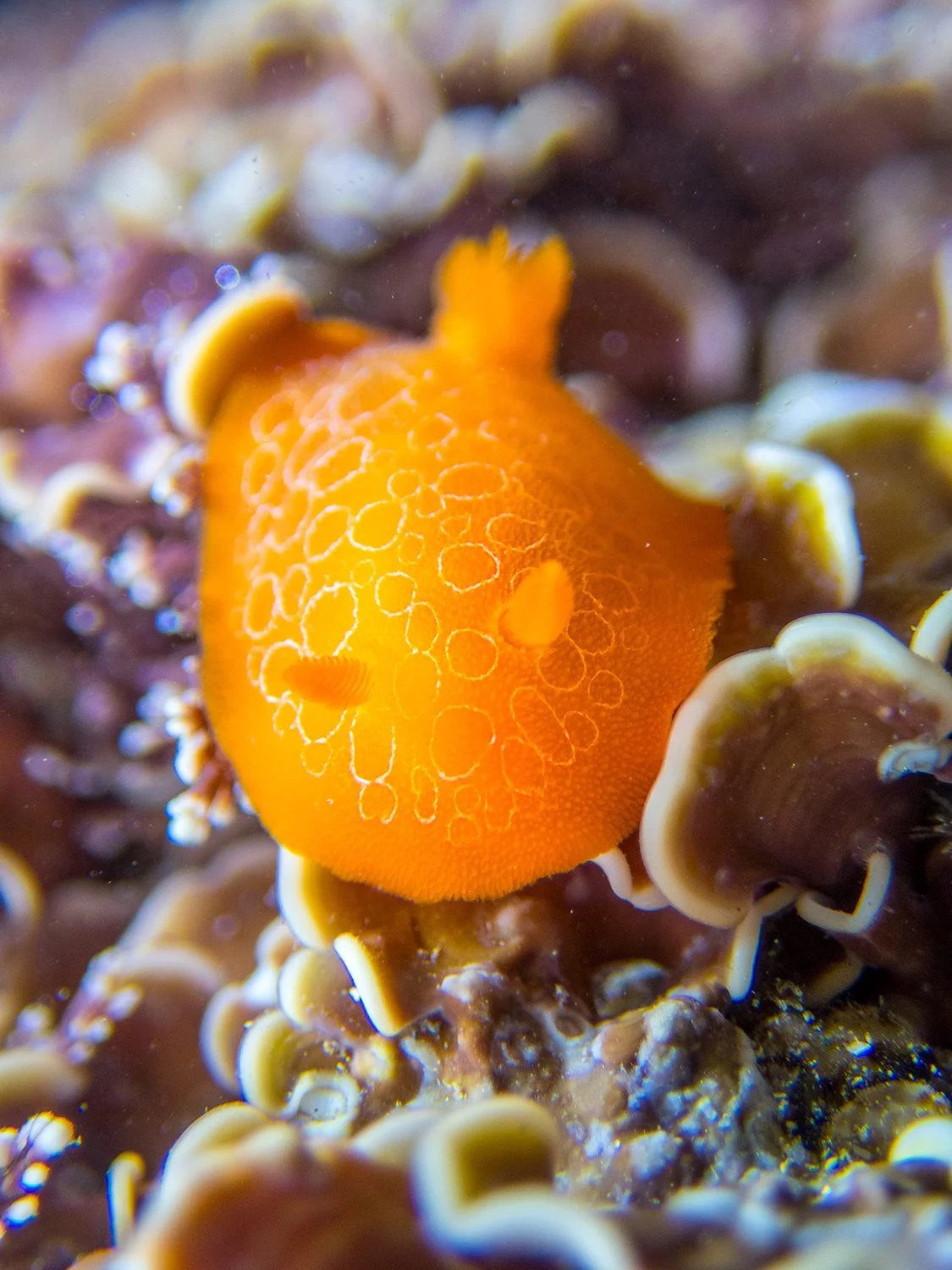
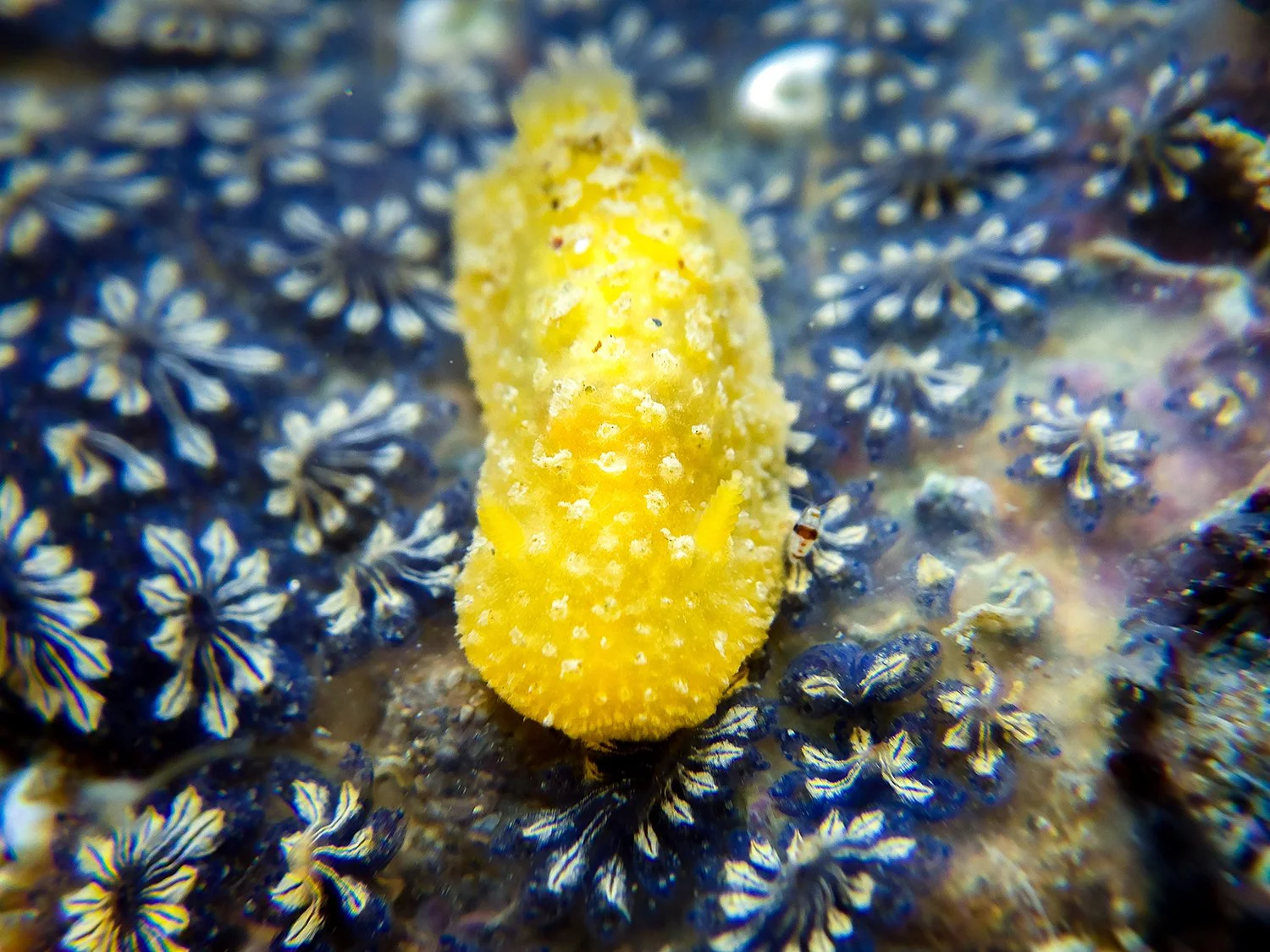
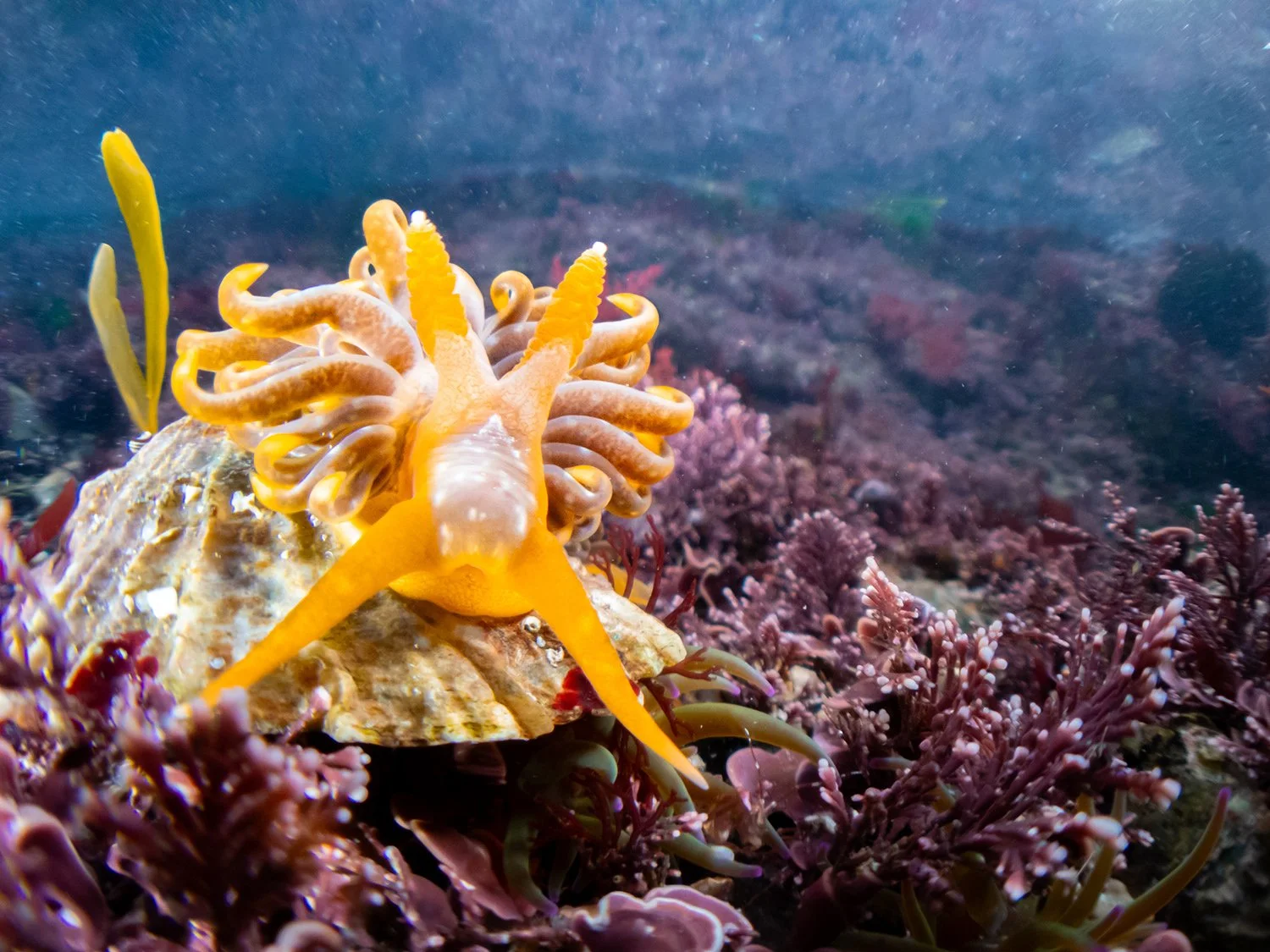

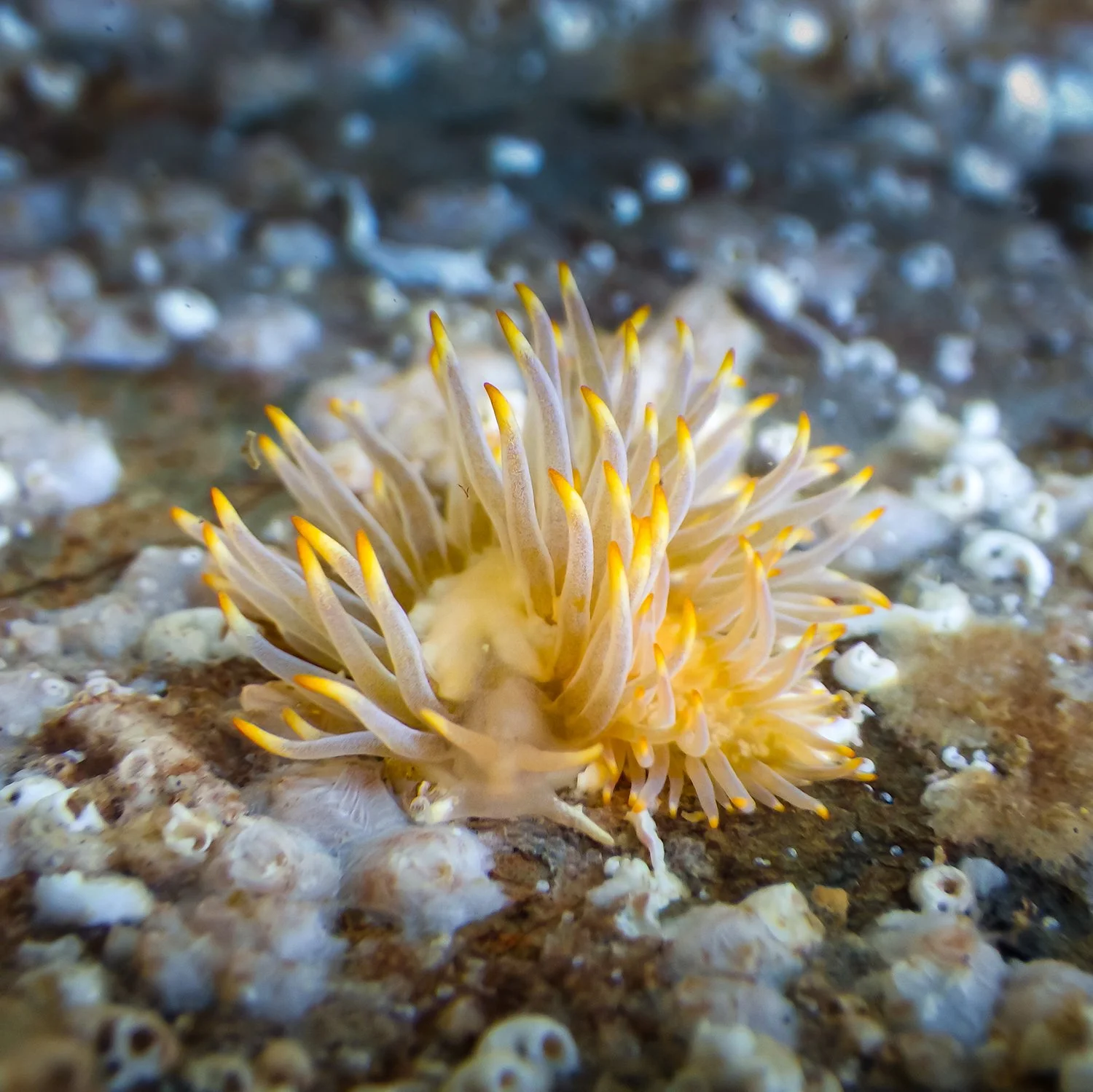
So far, I’ve found over 30 species of sea slug in the rock pools and shallow water around Falmouth. They may not be the easiest thing to find, but they are brilliant for macro and underwater photography, and if you spend a bit of time there’s an abundance of them to see - plus, who knows which species will turn up next?